Read Now
Getting your Trinity Audio player ready... |
Yamla Jatt
List of Top 20 Songs of Yamla Jatt
Yamla Jatt, or Yamla Jatt Paindabad, is the legendary Punjabi folk singer, also known by his birth name Mohammad Sadiq, who was known for his powerful voice and timeless melodies. However, it’s worth mentioning that the artist often known as “Yamla Jatt” is (Lal Chand Yamla Jatt), another iconic figure in Punjabi folk music. Lal Chand Yamla Jatt was famous for popularizing Punjabi folk music and the use of traditional instruments like the tumbi.
Here are 20 hit songs of Lal Chand Yamla Jatt, though not all of them are linked to a specific album or date because many of his works were released as singles during his era (primarily in the 1950s–1970s):
- “Das Main Ki Pyar Wichon Khatta” (1950s)
Album: Single - “Satgur Nanak Teri Leela Nyaari Ae” (1950s)
Album: Single - “Khedan De Din Char” (1960s)
Album: Single - “Jatt Di Tumbi Wajdi” (1960s)
Album: Single - “Mera Rang De Basanti Chola” (1960s)
Album: Single - “Tumbi Wale Jatt” (1970s)
Album: Single - “Boliyaan” (1960s)
Album: Single - “Nachdi Di Photo” (1960s)
Album: Single - “Rangla Punjab” (1960s)
Album: Single - “Mere Yaaran Ne Sharaab Laiyi” (1960s)
Album: Single - “Nahin Farak Painda” (1970s)
Album: Single - “Jadon Meri Arthi Uthi Jaave” (1970s)
Album: Single - “Putt Jattan De” (1960s)
Album: Single - “Chheti Kar Sarwan Bachcha” (1960s)
Album: Single - “Yamla Jatt Paindabad” (1970s)
Album: Single - “Dharti Punjab Di” (1960s)
Album: Single - “Vichhode Wich Pardesi” (1960s)
Album: Single - “Jind Jaan Sohneya” (1970s)
Album: Single - “Pind Diyaan Galiyaan” (1960s)
Album: Single - “Mitti Punjab Di” (1970s)
Album: Single
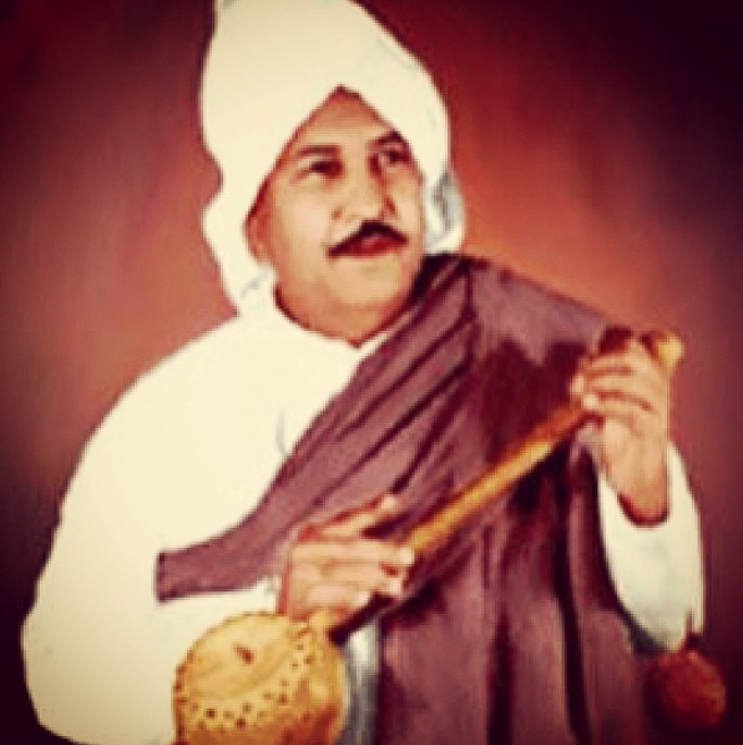
Who was Yamla Jatt ?
Lal Chand Yamla Jatt: The Father of Punjabi Folk Music
Lal Chand Yamla Jatt, often referred to simply as Yamla Jatt, is a name synonymous with the very soul of Punjabi folk music. Born in 1914 in the village of Chak No. 384, Lyallpur District (now in Pakistan), Yamla Jatt’s contributions to the world of Punjabi music have left a profound impact that continues to reverberate even decades after his death. His unique singing style, deep connection with the rural ethos of Punjab, and mastery of the tumbi, a traditional string instrument, made him a pioneer and a cultural icon in the field of Punjabi music.
This legendary singer’s career spanned over four decades, during which he produced countless folk songs that continue to be celebrated for their simplicity, authenticity, and emotional depth. His music revolved around the everyday lives, struggles, and joys of the common people of Punjab, making his songs relatable to a broad audience. This essay will explore the life, career, and lasting influence of Lal Chand Yamla Jatt, tracing his rise to prominence, his timeless musical contributions, and his enduring legacy.
Early Life and Background
Lal Chand Yamla Jatt was born into a rural Sikh family in the pre-partition Punjab, a region that was then part of British India. The son of a humble farmer, Yamla Jatt was deeply rooted in the agrarian culture of Punjab from a very young age. This connection with the soil, the fields, and the simple rural life would go on to shape not only his music but also his worldview. His early exposure to Punjabi folk songs, sung by the villagers during festivals, weddings, and communal gatherings, ignited his passion for music.
Yamla Jatt’s early life was marked by the hardships that many rural Punjabis faced during the colonial period. The difficult economic conditions and the struggles of farmers deeply affected him and became recurring themes in his music. He was particularly fascinated by the tumbi, a one-stringed instrument that was commonly used in traditional Punjabi music. This instrument would later become his signature accompaniment, helping him carve out a distinctive place in the world of Punjabi folk music.
Musical Beginnings
He began his musical career in the late 1930s and early 1940s, a time when Punjabi music was largely dominated by tappas and ghazals. While these genres were appreciated by the elite and urban classes, they did not fully capture the essence of rural Punjab. He on the other hand, was determined to bring the folk music of the rural heartland to the forefront.
His songs were not just melodies; they were stories. They spoke of the joys and sorrows of farmers, the love for the land, and the celebrations and hardships that marked rural life. His lyrics, combined with his deep, resonant voice and the twang of the tumbi, created an emotional resonance that immediately connected with his audience.
One of Yamla Jatt’s early hits was “Das Main Ki Pyar Wichon Khatta”, which gained immense popularity in the 1940s. This song, with its melancholic yet hopeful undertones, was a reflection of the emotional turmoil that many rural Punjabis felt during the political upheavals of the time, including the looming threat of Partition.
The Partition of India and Its Impact
The partition of India in 1947 was a pivotal moment in the life of Lal Chand Yamla Jatt. Like millions of others, he was forced to leave his ancestral home in what is now Pakistan and migrate to India. The violence, displacement, and trauma of Partition left a deep scar on his psyche, and these emotions found their way into his music.
In the years following Partition, His songs often reflected a sense of loss and longing for the land he had left behind. Songs like “Chheti Kar Sarwan Bachcha” and “Vichhode Wich Pardesi” (released in the 1950s) captured the pain of separation from one’s homeland and loved ones, emotions that resonated with millions of Punjabis who had experienced similar trauma.
Despite these personal and historical challenges, Yamla Jatt’s career continued to flourish in post-Partition India. He settled in Ludhiana, Punjab, where he quickly became a household name. His music became an integral part of Punjabi radio, and his performances at local festivals and melas drew large crowds. By the 1950s and 1960s, Yamla Jatt had cemented his status as one of the most beloved folk singers in Punjab.
Rise to Prominence in the 1950s and 1960s
The 1950s and 1960s marked the peak of Yamla Jatt’s career. His music was widely broadcast on All India Radio, and he became a regular performer at cultural events across Punjab. It was during this time that some of his most iconic songs were released, many of which continue to be cherished by fans of Punjabi music to this day.
“Satgur Nanak Teri Leela Nyaari Ae” (released in the 1950s) was one of his most famous religious songs, a devotional tribute to Guru Nanak, the founder of Sikhism. The song’s spiritual depth, combined with Yamla Jatt’s soulful voice, made it a favorite in gurdwaras and Sikh households across Punjab.
In addition to religious songs, Yamla Jatt was also known for his bhangra numbers, which were upbeat and celebratory. “Khedan De Din Char” (1950s) is one such song that showcases his versatility as an artist. This song, which celebrates the festive spirit of rural Punjab, became an instant hit and is still played at Punjabi weddings and celebrations.
Yamla Jatt’s ability to seamlessly switch between soulful devotional songs and energetic bhangra tracks made him a versatile artist who could appeal to a wide audience. His tumbi playing, in particular, became legendary, with many aspiring musicians attempting to emulate his unique style.
Signature Style and Influence
Lal Chand Yamla Jatt’s music was characterized by its simplicity, emotional depth, and authenticity. His lyrics often revolved around themes of love, loss, devotion, and rural life, and his music was deeply rooted in the folk traditions of Punjab. Unlike many of his contemporaries who experimented with Western instruments and styles, Yamla Jatt remained true to his roots, using traditional instruments like the tumbi, dhol, and chimta in his performances.
The tumbi, in particular, became synonymous with Yamla Jatt. He was known for his mastery of this one-stringed instrument, which he used to create a rhythmic accompaniment to his singing. His ability to play the tumbi while simultaneously delivering powerful vocals set him apart from other singers of his time.
One of his most famous songs, “Jatt Di Tumbi Wajdi” (1960s), is a testament to his skill with the instrument. The song celebrates the pride and resilience of the Punjabi farmer, with the tumbi serving as a symbol of their strength and endurance. The rhythmic beats of the tumbi and His powerful voice made this song an anthem for rural Punjabis.
Another song that exemplifies his signature style is “Mukhda Dekh Ke” (1960s). This romantic ballad showcases His ability to convey deep emotions through his voice. The song’s simple yet evocative lyrics, combined with the haunting melody of the tumbi, made it a favorite among listeners.
Yamla Jatt, born as Ali Mohammad in 1914, is celebrated as one of the finest Punjabi folk singers and a significant contributor to Punjabi music. His unique singing style and voice earned him the title “Yamla Jatt” (literally meaning the simple-hearted Jatt), and he became an iconic figure in the world of Punjabi folk music. His deep, rustic voice resonated with the Punjabi rural landscape, bringing out the essence of village life, simple joys, and the deep emotions tied to the culture.
Early Life and Career
Yamla Jatt was born in Chak No. 384, a village in the Lyallpur District (now Faisalabad) of Punjab, British India. From an early age, he had a profound love for music, particularly folk singing. His singing journey started with his interest in the Punjabi rural tradition of tappay and boliyan, which are impromptu verses sung during festivities and village gatherings. Yamla Jatt was influenced by the folk singing traditions of Punjab, which relied heavily on themes of love, longing, and rural life.
His breakthrough came when he began collaborating with All India Radio, a popular platform in the mid-20th century, giving him access to a broader audience. His songs, often infused with melancholy, love, and heartache, connected deeply with listeners. His mastery over tappe (traditional Punjabi couplets) became his signature, and he excelled in singing about the everyday struggles and emotions of common folk.
Musical Contributions
Yamla Jatt’s music encapsulated the essence of rural Punjab, often portraying themes of love, sorrow, and separation, all tied closely with the agrarian lifestyle. His songs like “Das Main Ki Pyar Wichon Khatta,” and “Satguru Nanak Teri Leela Nyaari Ae” are still remembered for their soul-stirring impact. He was a pioneer of traditional jugni singing, a genre associated with folk storytelling and moral lessons.
Yamla Jatt had a distinctive voice that was coarse, filled with raw emotion, and reflected the agrarian identity of Punjabi villages. His folk singing style was heavily influenced by the everyday experiences of rural Punjab, making his music relatable to millions. He kept the traditional sounds of Punjab alive by using minimal instrumentation and focusing on the lyrical and vocal strength of his compositions.
Family and Legacy
Yamla Jatt was deeply rooted in his family and was a proud patriarch. His grandson, Jassi Yamla, has followed in his footsteps and continues the musical legacy. Jassi has preserved his grandfather’s style and contributed to keeping Punjabi folk music alive in the face of changing musical trends. He often pays tribute to his legendary grandfather by performing Yamla Jatt’s famous songs during various musical events and festivals.
While not much is publicly available about Yamla Jatt’s personal life beyond his music, it is clear that his passion for Punjabi culture and folk traditions played a central role in shaping his family’s artistic path. His descendants carry forward his dedication to folk music, ensuring that Yamla Jatt’s influence endures through the generations.
Death and Posthumous Recognition
Yamla Jatt passed away on December 20, 1991, leaving behind a treasure trove of folk music and a significant legacy in Punjabi cultural history. His death marked the end of an era in Punjabi music, but his influence remains ever-present. Even after his death, his songs continue to be played at Punjabi gatherings, weddings, and folk festivals, where they serve as reminders of his profound contribution to Punjabi music.
In recognition of his immense contribution to Punjabi folk music, Yamla Jatt was awarded numerous accolades, including the prestigious Padma Shri in 1984, one of India’s highest civilian honors, for his contribution to arts and culture. His songs remain timeless, and his legacy is preserved through recordings, remixes, and performances by subsequent generations of Punjabi artists.
Later Years and Legacy
In the 1970s and 1980s, as modern Punjabi music began to incorporate elements of pop and Western genres, He remained steadfast in his commitment to folk music. While many younger artists were experimenting with new sounds and styles, Hecontinued to perform and record songs that celebrated the traditional culture of Punjab.
His later works, such as “Mitti Punjab Di” (1970s) and “Rangla Punjab” (1970s), were nostalgic tributes to the land and people of Punjab. These songs, which were filled with pride for his cultural heritage, resonated deeply with listeners who were witnessing rapid social and economic changes in Punjab.
He continued to perform well into his later years, and his music remained popular across generations. His contributions to Punjabi folk music were recognized by the Government of India when he was awarded the prestigious Padma Shri in 1980. This honor, one of the highest civilian awards in India, was a testament to his enduring influence on Indian music and culture.
He passed away on December 20, 1991, but his legacy continues to live on through his music. His songs are still played at Punjabi festivals, weddings, and gatherings, and his influence can be heard in the works of contemporary Punjabi musicians.
Enduring Influence on Punjabi Music
Even after his death, His influence on Punjabi music remains profound. His commitment to preserving the folk traditions of Punjab, his mastery of the tumbi, and his deep connection to the rural ethos have inspired countless musicians over the years.
Artists such as Gurdas Maan, Harbhajan Mann, and Surinder Shinda have all cited Yamla Jatt as a major influence on their music. His songs, with their emotional depth and authentic portrayal of Punjabi life, continue to be a source of inspiration for musicians and lyricists.
Conclusion
Lal Chand Yamla Jatt’s contribution to Punjabi folk music is unparalleled. His ability to capture the essence of rural Punjab, his mastery of
Listen Yamla Jatt on WYNK Music
Watch Yamla Jatt on Youtube
FAQs
- Who was Yamla Jatt?
- Yamla Jatt, also known as Lal Chand Yamla Jatt, was a renowned Punjabi folk singer known for his soulful and traditional music.
- What are some of Yamla Jatt’s most famous songs?
- Some of his most famous songs include “Das Main Ki Pyar Wichon Khattya,” “Satgur Nanak Teri Leela Nyaari Ae,” and “Whisky Di Botal Wargi”1.
- What themes are commonly found in Yamla Jatt’s songs?
- His songs often revolve around themes of love, devotion, and Punjabi culture, reflecting the rural life and traditions of Punjab.
- When did Yamla Jatt become popular?
- Yamla Jatt gained popularity in the mid-20th century and became a significant figure in Punjabi folk music.
- Did Yamla Jatt collaborate with other artists?
- Yes, he recorded some duet songs with Mohinderjit Kaur Sekhon, a recording artist with All India Radio (AIR), Jalandhar.
- What makes Yamla Jatt’s music unique?
- His music is characterized by its traditional Punjabi folk style, heartfelt lyrics, and his distinctive voice that resonated with many listeners.
- Are there any modern renditions of Yamla Jatt’s songs?
- Yes, many contemporary artists have covered his songs, keeping his legacy alive in modern Punjabi music.
- Where can I listen to Yamla Jatt’s songs?
- His songs are available on various music streaming platforms like YouTube, Spotify, and Apple Music.
- What impact did Yamla Jatt have on Punjabi music?
- Yamla Jatt is considered a pioneer in Punjabi folk music, and his contributions have greatly influenced the genre and inspired many artists.
- Is there any documentary or book about Yamla Jatt’s life and music?
- While there may not be a widely known documentary, his life and music have been discussed in various articles and books on Punjabi folk music.
- What instrument was Yamla Jatt famous for playing?
- He was famous for playing the tumbi, a traditional North Indian instrument.
- What was Yamla Jatt’s real name?
- His real name was Lal Chand.
- When and where was Yamla Jatt born?
- He was born on March 28, 1910, in Chak No. 384, Punjab Province, British India (now in Punjab, Pakistan).
- When did Yamla Jatt pass away?
- He passed away on December 20, 1991, in Ludhiana, Punjab, India.
- Did Yamla Jatt receive any awards for his music?
- Yes, he was awarded the Gold Medal by Indian Prime Minister Pt. Jawaharlal Nehru in 1956 and a lifetime contribution award in 1989 by the National Academy of Dance, Drama, and Music, Delhi, India.
- What was Yamla Jatt’s contribution to Punjabi folk music?
- He laid the foundation of contemporary Punjabi music in India and popularized the tumbi.
- Did Yamla Jatt have any children?
- Yes, he had two daughters and five sons.
- What was Yamla Jatt’s trademark style?
- His trademark was his soft strumming of the tumbi and his turban tying style known traditionally as “Turla”.
- Did Yamla Jatt perform internationally?
- Yes, he performed all over the world and often collaborated with other artists like Alam Lohar.
- How has Yamla Jatt’s music been preserved and celebrated today?
- His music continues to be celebrated through modern renditions, covers by contemporary artists, and availability on various music platforms.