Read Now
Getting your Trinity Audio player ready... |
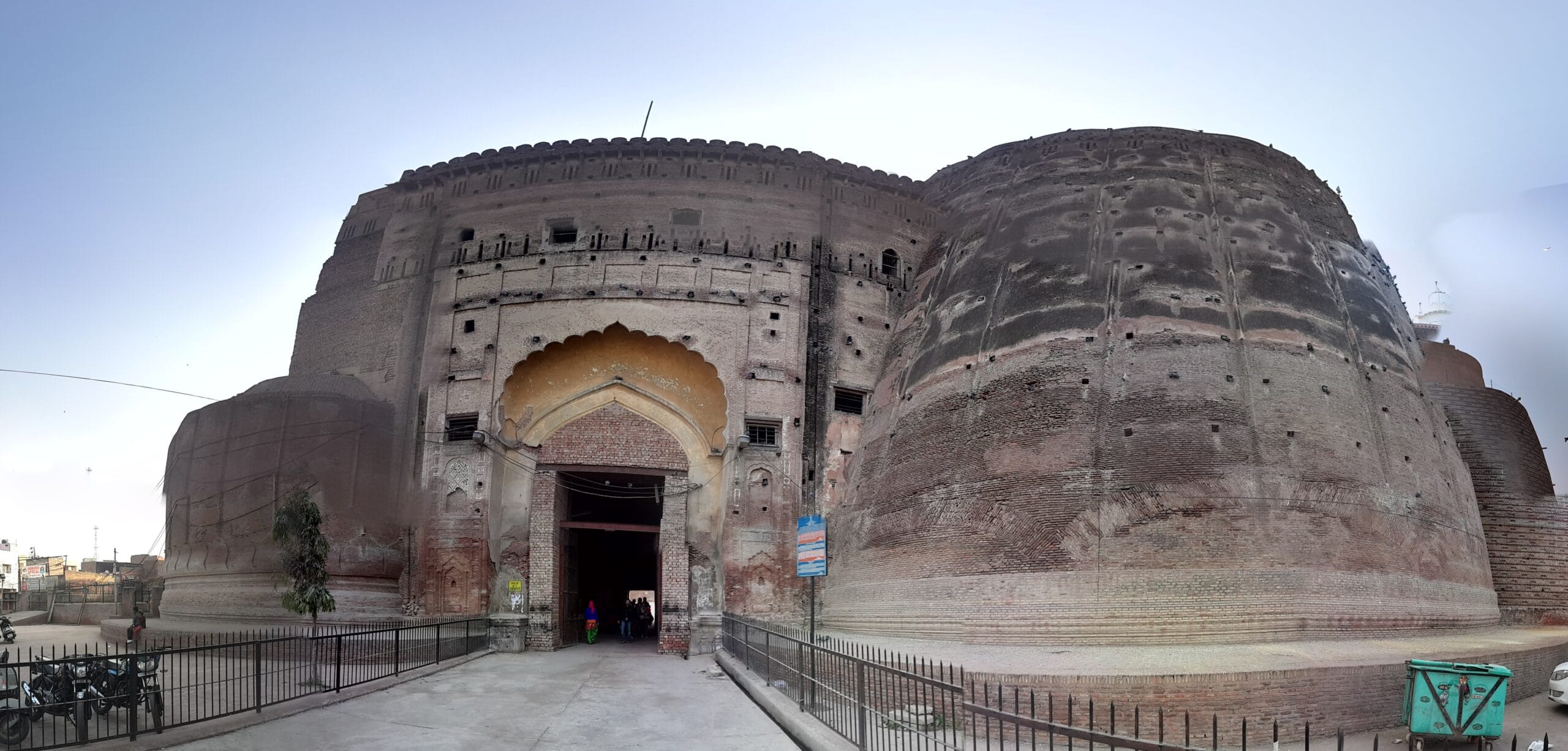
Qila Mubarak Bathinda 25 Facts, History, Images, Information
25 detailed facts about Qila Mubarak
- Historical Significance: Qila Mubarak is one of the oldest forts in India, dating back to the 6th century. The fort’s history spans multiple empires, including the Kushans, Guptas, Mughals, and Sikhs.
- Location: The fort is located in Bathinda, Punjab, at a strategic point near the Ghaggar-Hakra River, which was historically an important location for military and trade routes.
- Foundation by Kushans: The fort’s initial structure was likely built by the Kushan dynasty in the 6th century. It was originally a small defensive structure, which grew in size and significance over time.
- Expansion under Mughal Rule: During the Mughal period, especially under Emperor Akbar in the 16th century, Qila Mubarak was expanded and fortified to enhance its military function. It became a major stronghold during this time.
- Strategic Importance: Due to its location, Qila Mubarak was strategically important as it served as a defense against invasions and also as a center for administering the region during the Mughal era.
- Sikh Empire Association: The fort gained prominence under the rule of Maharaja Ranjit Singh, the founder of the Sikh Empire, in the early 19th century. It became a key military base and administrative center for the Sikh Empire.
- Rebuilding under Ranjit Singh: Maharaja Ranjit Singh made significant modifications to the fort, enhancing its structure, and using it as a military base to safeguard Sikh interests in the region.
- Rani Mahal: One of the most significant features of Qila Mubarak is the Rani Mahal, the Queen’s Palace, which served as the residence for the Maharaja’s wives and concubines. The palace is known for its intricate frescoes and delicate architectural design.
- Architectural Design: The fort blends Mughal and Sikh architectural styles. Mughal influences are seen in the arches, domes, and military design, while Sikh architecture can be observed in the ornate carvings and decorative elements.
- Fort’s Fortifications: The fort’s walls are made of thick, sturdy stone, reinforced with towers and bastions. These defensive structures were designed to protect the fort from invasions, making it a near-impenetrable stronghold.
- The Main Gate: The main entrance of Qila Mubarak is grand, showcasing a fusion of Persian and Mughal architectural styles. The gates are designed with intricate carvings and large arches.
- Watchtowers: The fort features several watchtowers located along its perimeter, which were used for surveillance. These towers allowed the soldiers to keep a lookout for approaching enemy forces.
- Strategic Location: Bathinda, where Qila Mubarak is located, was an important center during the Mughal and Sikh eras due to its proximity to key trade routes and its central position in Punjab.
- Mughal Influence: The fort reflects the influence of Mughal military architecture. The Mughal rulers focused heavily on fortifications, which are visible in Qila Mubarak’s robust design.
- Use as a Military Base: During the Mughal and Sikh periods, Qila Mubarak was used not only as a royal residence but also as a military base for local commanders. It played a critical role in the defense of Punjab.
- Decline During British Rule: After the British annexed Punjab in 1849, Qila Mubarak’s strategic importance declined. The British did not maintain the fort, leading to a gradual deterioration of its structure.
- Cultural Significance: Despite its neglect under British rule, Qila Mubarak has always been seen as a symbol of Punjab’s rich cultural and historical heritage. It represents the region’s history under the Mughals and Sikhs.
- Restoration Efforts: In the modern era, significant restoration efforts have been made to preserve the fort. The Archaeological Survey of India (ASI) and the Punjab government have undertaken steps to maintain its historical integrity.
- Tourist Attraction: Today, Qila Mubarak is a major tourist attraction in Punjab. Visitors from across India and abroad come to explore the fort’s architecture, history, and role in shaping the region’s past.
- Part of Bathinda’s History: Qila Mubarak is integral to Bathinda’s identity. The city itself has played a prominent role in Punjab’s history, and the fort stands as a reminder of its past prominence.
- Ruler’s Residence: The fort was also used as a residence by the rulers of the region, particularly during the time of Maharaja Ranjit Singh. The structure served as a center for royal administration and governance.
- Marble and Stone Carvings: The fort features exquisite marble carvings and stone inlays that reflect the artistic sensibilities of the time. The intricate designs are a blend of Mughal and local Punjab artistry.
- Cultural Events: Qila Mubarak also hosts cultural events that celebrate the heritage of Punjab, offering visitors a chance to experience the region’s art, music, and history.
- Educational Significance: The fort serves as an important educational site, helping students and researchers learn about the historical transitions of the region from the Mughal Empire to the Sikh Empire and beyond.
- Religious Symbolism: Qila Mubarak, like many historical forts in Punjab, has also come to symbolize the region’s religious diversity. It was not only a military and political center but also a place where various cultural and religious traditions intersected, particularly during the Sikh Empire.
Qila Mubarak is not just a fort; it is a living historical monument that tells the story of Punjab’s transformation through the centuries. From its origins under the Kushans to its prominence during the Mughal and Sikh periods, the fort has been a silent witness to the dynamic history of the region. Today, Qila Mubarak stands as a symbol of the resilience of Punjab’s heritage, reflecting both the military might of past rulers and the cultural vibrancy of the region. Its preservation ensures that the stories of the past continue to inspire future generations.

Qila Mubarak of Bathinda: A Historical and Architectural Marvel
Qila Mubarak, located in Bathinda, Punjab, is one of the oldest and most significant forts in the Indian subcontinent. The fort, with its grandeur, historical legacy, and architectural marvels, is a testament to the rich cultural and political history of the region. Situated in the heart of Punjab, Bathinda has been a significant center for many empires, including the Mauryas, Guptas, Mughals, and Sikhs.
Qila Mubarak holds a prominent place in the region’s heritage, reflecting the transition of power and the amalgamation of cultures throughout the centuries. Its strategic importance, historical relevance, and architectural beauty make it a must-visit historical site in India. This article delves into the rich history, architectural features, and significance of Qila Mubarak, exploring its journey from its origins to its current status as a symbol of Punjab’s illustrious past.
Historical Background of Qila Mubarak
The history of Qila Mubarak spans several centuries, with the earliest constructions believed to have been made by the Kushans in the 6th century. The fort’s location at the intersection of the Ghaggar-Hakra River was of strategic importance in ancient times, and it quickly became a key site for various rulers seeking to control the region.
Early Origins and Kushan Rule
The origins of Qila Mubarak are believed to date back to the Kushan Empire, which ruled much of northern India in the 2nd and 3rd centuries CE. The early structure of the fort was likely small, constructed for defensive purposes and strategically positioned to monitor the surrounding areas. However, the fort’s significance increased over time, particularly when it came under the control of successive dynasties that sought to maintain control over this vital region.
Mughal Influence
In the 16th century, during the reign of the Mughal emperor Akbar, the fort saw substantial expansion and fortification. Akbar, known for his military and administrative reforms, saw the importance of Bathinda as a military outpost and sought to strengthen the defenses of the fort. Under Akbar’s reign, Qila Mubarak was substantially rebuilt, with its walls and gates reinforced to withstand potential sieges.
The Mughal architecture introduced during Akbar’s reign is reflected in the fort’s current structure. Large gates, watchtowers, and other military features were added, ensuring that Qila Mubarak served both as a symbol of Mughal power and as a stronghold for controlling the strategic region of Punjab.
Sikh Era and Maharaja Ranjit Singh
The most significant chapter in the history of Qila Mubarak came during the reign of Maharaja Ranjit Singh, the founder of the Sikh Empire in the early 19th century. After the collapse of the Mughal Empire, Ranjit Singh’s forces moved into the Punjab region, and Bathinda came under Sikh control. Ranjit Singh recognized the fort’s strategic value and used it as a military base and administrative headquarters. Under his rule, Qila Mubarak was further expanded and renovated.
The fort became a symbol of Sikh military and political power during Ranjit Singh’s reign, reflecting the Sikh Empire’s ability to maintain control over a region that had been contested for centuries. During this time, the fort housed the Sikh military elite and served as a center for the region’s governance.
The fort’s association with the Sikh Empire was further cemented by the legacy of Ranjit Singh’s successors. However, after the British annexation of Punjab in 1849, the fort began to lose its military and political importance.
Architectural Features of Qila Mubarak
Qila Mubarak is an excellent example of a fusion of architectural styles, blending Mughal and Sikh elements. The fort’s design includes elements typical of Mughal military architecture, such as thick defensive walls, watchtowers, and large gates. However, the fort also bears marks of Sikh influence, with intricate carvings and symbols that reflect the cultural and religious ethos of the Sikh Empire.
The Fortifications and Walls
The fort is enclosed by massive walls that are several meters high and reinforced with strong bastions and watchtowers. These defensive walls were designed to protect the fort from invasions and to provide a vantage point for surveillance. The fort is strategically located at the top of a slight elevation, allowing the occupants to monitor movements in the surrounding areas.
The thick, imposing walls are punctuated by arched entrances, which lead into various sections of the fort. These entrance gates were designed to be narrow and difficult to breach, preventing enemies from easily infiltrating the fort. The fort’s strategic location and strong fortifications made it nearly impregnable, ensuring its survival through numerous invasions and battles.
The Main Entrance
One of the most striking features of Qila Mubarak is its grand entrance. The main gate is large and majestic, designed to reflect the fort’s significance. The entrance, with its imposing arches and intricate carvings, gives visitors a glimpse of the fort’s grandeur. The gate’s design is influenced by Mughal architecture, with intricate floral patterns and geometrical shapes adorning its surface.
The Watchtowers
At regular intervals along the fort’s walls, there are watchtowers that provide strategic vantage points for surveillance. These towers were essential for monitoring the movements of enemy forces and ensuring the fort’s security. The design of the towers is characteristic of Mughal military architecture, which emphasized the importance of fortifications and military readiness.
The Residential Quarters and Palace Complex
Inside the fort, there are residential quarters that were used by the rulers, military commanders, and their families. The most prominent of these is the Rani Mahal, or the Queen’s Palace, which was designed to house the wives and concubines of the Maharaja. The Rani Mahal features intricate frescoes and delicate architectural details, showcasing the artistic finesse of the time.
The palace is adorned with beautiful arches, carved wooden doors, and marble flooring. The courtyards within the palace complex were used for relaxation and social gatherings. The palace was not just a residence but also a place of political discussion and decision-making during the reign of Ranjit Singh.
The Fort During the British Era
After the British annexation of Punjab in 1849, the importance of Qila Mubarak diminished. The British colonial administration focused on consolidating their control over the region and gradually abandoned the fort. The British did not invest in the fort’s upkeep, leading to its gradual decline. However, Qila Mubarak still remained a symbol of the region’s glorious past.
During this period, Bathinda itself transformed into a more urbanized town, with the construction of new roads and buildings, marking the beginning of the modernization of the region. Despite the neglect by the British, Qila Mubarak continued to stand as a silent witness to the changing political landscape.
Qila Mubarak in Modern Times
In the post-independence era, Qila Mubarak became an important historical and tourist destination. Efforts were made to preserve the fort and restore its architectural beauty. The fort was opened to the public, and over time, it became an essential part of Bathinda’s tourism infrastructure.
The fort today stands as a major symbol of Punjab’s rich cultural heritage. It is frequently visited by tourists, historians, and scholars who are interested in learning about the region’s history and architecture. The fort is also an important cultural venue, hosting events, exhibitions, and festivals that showcase Punjab’s history and traditions.
Restoration and Preservation Efforts
The Archaeological Survey of India (ASI) and the Punjab Government have undertaken several restoration projects to preserve Qila Mubarak. These efforts focus on repairing the fort’s walls, gateways, and other structures that have suffered from years of neglect. The restoration work has ensured that the fort remains a vital part of Punjab’s historical and cultural landscape.
Conclusion
Qila Mubarak of Bathinda is an iconic monument that encapsulates the historical, cultural, and architectural evolution of Punjab. From its origins as a military stronghold under the Kushan rulers to its transformation during the Mughal and Sikh periods, the fort has been a silent witness to the changing tides of history. The fort’s blend of architectural styles, strategic location, and association with powerful rulers such as Akbar and Maharaja Ranjit Singh make it an essential part of Punjab’s heritage.
Today, Qila Mubarak stands as a monument to the region’s glorious past, attracting visitors and scholars who are keen to learn about the fort’s fascinating history. Its preservation is crucial for future generations to understand the historical significance of Bathinda and its role in shaping Punjab’s cultural and political landscape. As a symbol of resilience, power, and heritage, Qila Mubarak continues to inspire admiration and awe.
FAQs
1. What is Qila Mubarak?
Qila Mubarak is a historical fort located in the heart of Bathinda, Punjab, India.
2. When was Qila Mubarak built?
The fort was constructed around the 6th century CE, with significant restorations done by Maharaja Ala Singh of Patiala.
3. Who built Qila Mubarak?
It is believed to have been built by Raja Dab, with contributions from Emperor Kanishka during the Kushana period.
4. What is the historical significance of Qila Mubarak?
The fort is recognized as a monument of national importance and has witnessed various historical events, including the imprisonment of Razia Sultan, the first woman to take charge of the Delhi throne.
5. What architectural styles are seen in Qila Mubarak?
The fort showcases a mix of architectural styles, including Mughal and Rajput influences2.
6. What can tourists see at Qila Mubarak?
Visitors can explore the fort’s bastions, the Darshani Gate, and the underground sewer system.
7. What is the height of Qila Mubarak?
The fort stands at a height of approximately 30 meters.
8. What is the best time to visit Qila Mubarak?
The best time to visit is between October and March when the weather is cooler and more pleasant.
9. Is there an entry fee for Qila Mubarak?
No, there is no entry fee for tourists.
10. Are there guided tours available at Qila Mubarak?
Guided tours may be available, providing in-depth information about its history, architecture, and culture.
11. What is the nearest airport to Qila Mubarak?
The nearest airport is in Chandigarh, approximately 100 kilometers away.
12. What is the nearest railway station to Qila Mubarak?
The nearest major railway station is in Bathinda city.
13. How can tourists reach Qila Mubarak?
Tourists can reach Qila Mubarak by road, taxi, auto-rickshaw, or local buses from various parts of Bathinda.
14. What is the significance of the underground sewer system?
The underground sewer system is an engineering marvel of its time, showcasing advanced planning and construction techniques.
15. What is the role of the Nabha Foundation in Qila Mubarak?
The Nabha Foundation has been involved in the restoration and preservation of Qila Mubarak.
16. What are some special events held at Qila Mubarak?
Occasionally, cultural events, exhibitions, and festivals are organized at Qila Mubarak, celebrating the rich heritage of Punjab.
17. What is the historical background of Qila Mubarak?
Qila Mubarak was originally built as a mud fortress by Raja Dab and later reconstructed in baked bricks.
18. What is the Museum of Armoury & Chandelier?
The Darbar Hall contains rare cannons, swords, shields, and maces, including the sword of Guru Gobind Singh.
19. What is the Lassi Khana?
The Lassi Khana is the kitchen of Qila Mubarak, showcasing traditional cooking areas and utensils.
20. What is the significance of Razia Sultan’s imprisonment at Qila Mubarak?
Razia Sultan, the first Empress of Delhi, was imprisoned at Qila Mubarak after her defeat and dethronement.
Qila Mubarak Bathinda
Qila Mubarak Bathinda
Qila Mubarak Bathinda
Qila Mubarak Bathinda
Qila Mubarak Bathinda
Qila Mubarak Bathinda
Qila Mubarak Bathinda
Qila Mubarak Bathinda
Qila Mubarak Bathinda
Qila Mubarak Bathinda
Qila Mubarak Bathinda
Qila Mubarak Bathinda
Qila Mubarak Bathinda
Qila Mubarak Bathinda
Qila Mubarak Bathinda
Qila Mubarak Bathinda
Qila Mubarak Bathinda
Qila Mubarak Bathinda
Qila Mubarak Bathinda
Qila Mubarak Bathinda
Qila Mubarak Bathinda
Qila Mubarak Bathinda
Qila Mubarak Bathinda
Qila Mubarak Bathinda
Qila Mubarak Bathinda
Qila Mubarak Bathinda
Qila Mubarak Bathinda
Qila Mubarak Bathinda
Qila Mubarak Bathinda