Read Now
Getting your Trinity Audio player ready... |
Phulkari
Phulkari: The Traditional Embroidery of Punjab, India
Introduction
Phulkari, meaning “flower work” in Punjabi, is a vibrant and intricate embroidery tradition from the Indian state of Punjab. This centuries-old textile art is deeply rooted in Punjabi culture, symbolizing prosperity, heritage, and artistic expression. Women in rural Punjab have traditionally practiced Phulkari embroidery, creating beautiful patterns on shawls, dupattas, and garments using brightly colored threads. Over time, Phulkari has evolved from a domestic craft to a globally recognized form of textile art, blending tradition with modern fashion trends.
Historical Significance of Phulkari
It dates back to the 15th century, with historical references found in Punjabi folklore and literature. It is believed to have originated from Iran or Central Asia and was brought to Punjab by early settlers. The embroidery became a household tradition among Punjabi women, particularly during the Mughal era, when textile craftsmanship flourished.
It was not just an artistic endeavor but also a symbol of love and devotion. Women embroidered Phulkari pieces for special occasions like weddings, childbirth, and festivals. It was a cherished part of a bride’s trousseau, passed down through generations as a family heirloom.
During the British colonial period, it gained recognition in European markets. However, after the Partition of India in 1947, the traditional art form saw a decline due to displacement and changing socio-economic conditions. In recent years, there has been a revival of it, supported by government initiatives, designers, and NGOs working to preserve this cultural heritage.
Types of Phulkari Embroidery
Its embroidery varies in style, stitch patterns, and purpose. The different types of Phulkari include:
1. Bagh Phulkari
- Meaning: “Bagh” means garden; this style covers the entire fabric with dense embroidery, making the base cloth almost invisible.
- Significance: Considered a mark of prosperity, Bagh Phulkari was traditionally worn by brides and elderly women.
- Common Colors: Gold, yellow, green, and red.
2. Chope Phulkari
- Meaning: A Chope is a shawl gifted to a bride before her wedding.
- Unique Feature: This style features symmetrical diagonal embroidery patterns.
- Color Scheme: Usually embroidered in red and yellow.
3. Suber Phulkari
- Usage: Worn by brides on their wedding day.
- Specialty: Features central motifs with large floral designs.
- Colors: Often in bright reds and pinks, with golden or white threadwork.
4. Darshan Dwar Phulkari
- Meaning: “Darshan Dwar” translates to “gateway to the divine.”
- Religious Significance: Embroidered as an offering to temples or gurudwaras.
- Designs: Depicts spiritual themes, temple motifs, and deities.
5. Sainchi Phulkari
- Artistic Feature: Illustrates everyday village life, including scenes of farmers, animals, and folk dancers.
- Usage: More than just decorative, this form tells stories through embroidery.
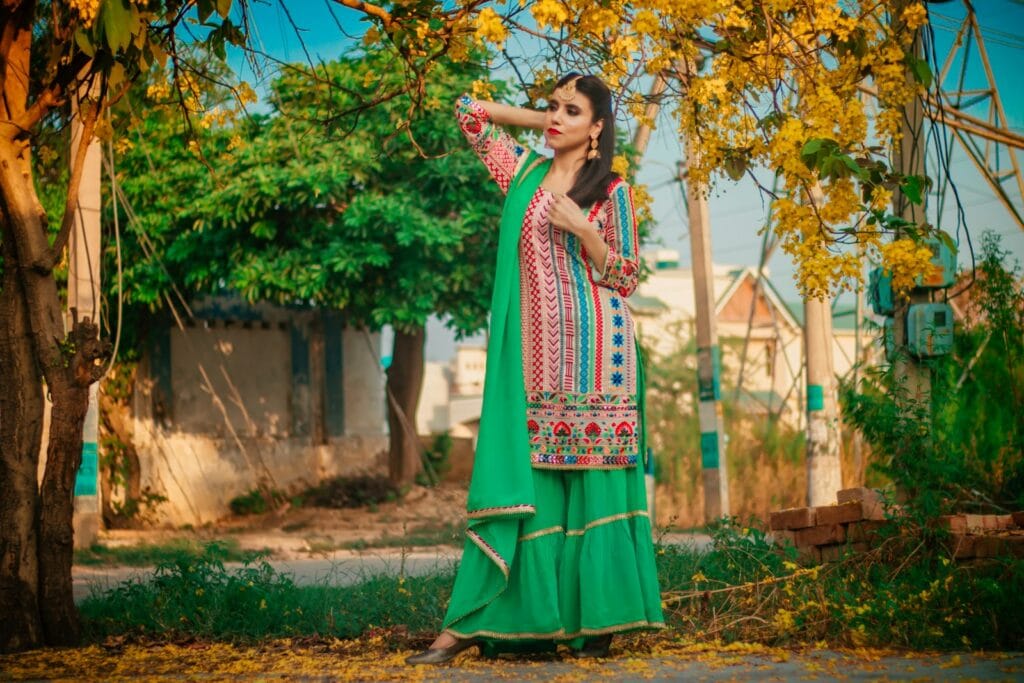
Techniques and Materials Used in Phulkari
Fabric
Traditional Phulkari embroidery is done on handwoven cotton or khaddar fabric, which provides a sturdy base for the intricate needlework. Today, artisans also use georgette, silk, and chiffon for modern adaptations.
Threads
The embroidery is executed using untwisted silk threads (Pat silk), available in vibrant colors like orange, yellow, red, blue, and pink. Cotton threads are sometimes used for contemporary designs.
Embroidery Stitches
Phulkari is primarily created using the darning stitch, where long and short stitches are made from the reverse side of the fabric to form geometric or floral designs. The direction of the stitches influences the shading and texture of the embroidery.
Color Combinations
It uses bold, contrasting colors. Red and gold are common in wedding attire, while yellow, green, and blue are used for everyday wear.
Cultural Importance of Phulkari in Punjab
It is more than just an art form; it is an integral part of Punjabi identity and social customs.
1. Phulkari in Weddings
It holds a special place in Punjabi weddings. Brides receive intricately embroidered Phulkari dupattas as a symbol of blessings, love, and prosperity. Mothers and grandmothers often handcraft these pieces, making them emotionally significant.
2. Phulkari in Festivals
During Baisakhi and Lohri, women dress in Phulkari outfits, performing Giddha and Bhangra dances in bright, embroidered dupattas.
3. Phulkari as an Heirloom
Its shawls are passed down through generations, preserving family traditions and craftsmanship.
Phulkari in Modern Fashion
With the revival of traditional crafts, it has found a place in contemporary fashion. Designers have reinterpreted Phulkari embroidery in sarees, lehengas, salwar suits, jackets, handbags, and footwear.
- Bollywood Influence: Celebrities and designers have showcased Phulkari in movies, fashion shows, and red-carpet events.
- Global Reach: Today, Phulkari is exported worldwide, with demand from the Indian diaspora and international fashion enthusiasts.
Challenges Facing Phulkari Artisans
Despite its growing popularity, it artisans face challenges such as:
- Machine-Made Replicas – Mass-produced designs have flooded markets, affecting the livelihood of traditional artisans.
- Declining Interest Among Young Generations – Hand embroidery is time-consuming, leading many young artisans to pursue other professions.
- Low Wages for Artisans – Traditional type takes months to complete, but artisans often receive minimal pay compared to commercial sellers.
- Need for Government Support – Policies and subsidies can help sustain and promote this traditional art.
Government and NGO Efforts to Preserve Phulkari
- Geographical Indication (GI) Tag: It has received a GI tag, protecting its authenticity and ensuring its roots in Punjab.
- Artisan Welfare Programs: Various NGOs are working with rural women to provide fair wages and training.
- Online Marketplaces: Digital platforms like Amazon, Flipkart, and Craftsvilla help artisans reach a wider audience.
How to Identify Authentic Phulkari
If you’re looking to buy authentic Phulkari, here are some key points:
- Hand-embroidered Phulkari has unique, uneven stitches, while machine-made versions have uniform patterns.
- Traditional it is crafted on khaddar fabric, whereas synthetic fabrics are often used for commercial replicas.
- Authentic Phulkari pieces take weeks or months to complete, making them more expensive than mass-produced versions.
Care and Maintenance of Phulkari
- Hand Wash or Dry Clean: Avoid machine washing to preserve embroidery.
- Store in a Cool, Dry Place: Keep its fabrics away from direct sunlight to prevent fading.
- Iron on Reverse Side: Use low heat to avoid damaging the threadwork.
Conclusion
It is a cherished textile tradition that has transcended generations in Punjab. From its historical roots in folk embroidery to its place in modern fashion, it continues to be a symbol of Punjabi culture, identity, and artistry. With growing awareness and efforts to preserve its authenticity, Phulkari remains an evergreen craft that connects the past with the present.
FAQs
General Information
- What is Phulkari?
- It is a traditional embroidery art form from Punjab, India, known for its intricate floral patterns.
- What does ‘Phulkari’ mean?
- The word Phulkari means “flower work” (Phul = flower, Kari = work) in Punjabi.
- Where did Phulkari originate?
- It originated in Punjab, India, and has been a part of Punjabi culture for centuries.
- What is the significance of Phulkari in Punjabi culture?
- It is deeply connected with Punjabi traditions and is often used in weddings, festivals, and celebrations.
- Is Phulkari only worn by women?
- Traditionally, Phulkari is worn by women, but modern adaptations include Phulkari jackets, turbans, and accessories for men.
Types of Phulkari
- What are the different types of Phulkari embroidery?
- Common types include:
- Bagh Phulkari (Heavy embroidery covering the entire fabric)
- Chope Phulkari (Given to brides as a wedding gift)
- Suber Phulkari (Worn by brides during wedding rituals)
- Darshan Dwar Phulkari (Religious-themed embroidery)
- Common types include:
- What is Bagh Phulkari?
- Bagh is a type of embroidery where the entire fabric is densely covered with designs, making the base cloth almost invisible.
- What is Chope Phulkari?
- Chope is a special with diagonal patterns given to brides as a part of their wedding trousseau.
Materials and Techniques
- What materials are used in Phulkari embroidery?
- Traditionally, it is made on handwoven cotton or khaddar fabric with silk or cotton thread.
- What type of thread is used in Phulkari?
- Pat silk (untwisted silk thread) is commonly used for embroidery.
- What embroidery technique is used in Phulkari?
- It is created using the darning stitch, where long and short stitches form intricate patterns.
- What colors are commonly used in Phulkari?
- Bright colors like red, orange, yellow, green, pink, and gold are often used in embroidery.
Phulkari in Fashion
- How is Phulkari used in modern fashion?
- Today, it is used in sarees, dupattas, kurtis, jackets, handbags, and home décor.
- Can men wear Phulkari?
- Yes, men wear embroidered turbans, jackets, and shawls.
- Is Phulkari only made in Punjab?
- While it is native to Punjab, artisans in Haryana, Rajasthan, and Delhi also produce it.
- What is the difference between Phulkari and Chikankari embroidery?
- It is bold and colorful with floral patterns, whereas Chikankari is delicate white embroidery on pastel fabrics.
Cultural and Historical Importance
- What is the historical significance of Phulkari?
- It was historically a symbol of prosperity and good fortune, often included in a bride’s dowry.
- Which communities in Punjab traditionally practice Phulkari embroidery?
- It was primarily done by Punjabi women, including Hindu, Sikh, and Muslim communities.
- How is Phulkari linked to Punjabi weddings?
- Brides often receive Phulkari dupattas as a gift from their family, symbolizing blessings and happiness.
Buying and Maintenance
- Where can I buy authentic Phulkari?
- Authentic it can be bought from Punjab, Amritsar, Patiala, Chandigarh, and online marketplaces.
- How do I differentiate between hand-embroidered and machine-made Phulkari?
- Hand-embroidered has uneven stitches and intricate detailing, while machine-made versions have perfectly symmetrical patterns.
- How do I take care of my Phulkari fabric?
- Handwash or dry clean items and store them away from direct sunlight to prevent fading.
Miscellaneous
- Is Phulkari a dying art?
- While machine-made it is common, efforts are being made to revive hand-embroidered Phulkari through government and NGO initiatives.
- Has Phulkari received any recognition?
- Yes, it received a Geographical Indication (GI) tag to protect its cultural identity.
- How has Phulkari evolved over time?
- It has transformed from traditional shawls to contemporary designer wear, appealing to global markets.