Read Now
Getting your Trinity Audio player ready... |
Bulleh Shah Poetry
Bulleh Shah: A Comprehensive Look at His Poetry
Introduction
Bulleh Shah, born in 1680 in Uch, Punjab (now in Pakistan), was a revered Sufi poet and philosopher. His poetry is deeply embedded in the Punjabi Sufi tradition and resonates with themes of love, self-realization, and divine wisdom. Often likened to Rumi in the Persian tradition, Bulleh Shah’s poetry continues to inspire people across linguistic and cultural barriers. His verses remain relevant today as they challenge religious orthodoxy, promote unity, and advocate for love as the highest form of worship.
Themes in Bulleh Shah’s Poetry
Bulleh Shah’s poetry explores a variety of themes, including:
- Spiritual Love – The poet sees divine love as the highest pursuit of human life.
- Mysticism and Sufism – His works echo Sufi ideals, particularly self-purification and the search for God within.
- Social Critique – He often critiques religious hypocrisy, social hierarchies, and materialism.
- Rejection of Formal Religion – Bulleh Shah dismisses religious formalities in favor of a direct connection with the divine.
- Self-Realization – His poetry encourages introspection and the discovery of one’s inner self.
A complete and definitive list of all of Bulleh Shah’s poems is difficult to compile, as his poetry was passed down through oral traditions and various collections. However, here are the names of some of his most famous kaafian (poems):
- Bullah Ki Jaana Main Kaun
- Tere Ishq Nachaya Kar Thayya Thayya
- Mera Piya Ghar Aaya
- Parh Parh Alam Fazil Hoya
- Ranjha Ranjha Kardi Ni Main Aape Ranjha Hoi
- Aashiqan Noon Faqar Sajawe
- Main Vi Jana Jhok Ranjhan Di
- Aaya Karay Malangiyan Wangu
- Je Raaz Na Labbo Ve Raazaiyan Nu
- Aakh Bulleya Sadqay Teri Masti
- Agar Daryaon Noon Par Langhda
- Kadi Aa Mil Yaar Pyare
- Ik Nu Parh Kay Ki Hoya
- Chal Bulleya Othe Chaliye
- Kujh Jaan Lain Aey Lok Saanu
- Nachan Di Wajeh Puchhdi Ai
- Jogi De Naal Na Jayein Koi
- Teri Khatir Duniyan Chhadi
- Akhiyan De Vich Tera Hi Noor
- Ki Jana Main Kaun
- Ik Raat Ve Sajjan Naal Guzaari
- Saanu Ik Nazar Da Shauk Si
- Main Jana Jhok Ranjhan Di
- Saiyan Saadey Naal
- Bullah Shah Asaan Marna Naahi
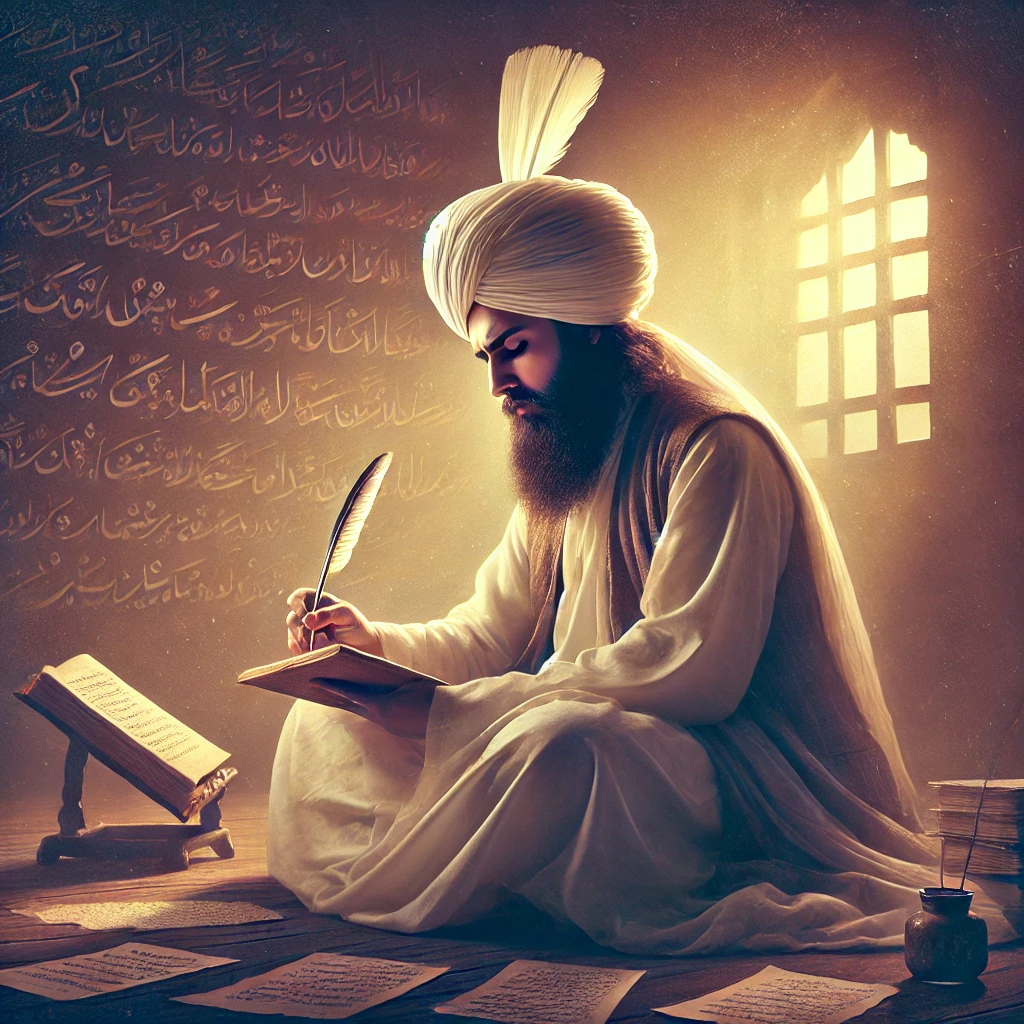
Major Poems and Their Significance
Bulleh Shah’s poetic works are largely composed in Kafi form—a short form of Punjabi poetry associated with Sufi thought. Here are some of his most famous and widely studied poems:
1. Bullah Ki Jaana Main Kaun
One of his most famous poems, Bullah Ki Jaana Main Kaun (Bullah, I do not know who I am), is a profound meditation on identity and self-awareness. The poet questions his own existence, highlighting the futility of labels based on religion, caste, or creed. The poem underscores the mystical belief that God is beyond all human definitions.
2. Tere Ishq Nachaya Kar Thaya Thaya
In this poem, Bulleh Shah describes his surrender to divine love. The phrase Kar Thaya Thaya signifies the uncontrollable ecstasy of a lover who has lost himself in devotion. The poem embodies the Sufi concept of Fana (annihilation in divine love), portraying love as a force that dissolves the ego and leads one closer to God.
3. Mera Piya Ghar Aaya
This poem reflects the joy of spiritual reunion. In Sufi poetry, the beloved (Piya) often symbolizes God, and the poet rejoices at his return. The verse conveys the idea that divine love is always present within, waiting to be realized.
4. Parh Parh Aalim Fazil Hoya
This poem critiques religious scholars who claim superiority through bookish knowledge but lack true wisdom. Bulleh Shah emphasizes that understanding God requires the heart’s purity rather than mere intellectual mastery.
5. Ranjha Ranjha Kardi Ni Main Aape Ranjha Hoyi
In this poem, Bulleh Shah aligns himself with the character of Ranjha from the Punjabi folk tale Heer Ranjha. The transformation of the poet into Ranjha signifies the spiritual seeker becoming one with the divine. This mirrors the Sufi idea that the lover and the beloved are ultimately the same.
Influence and Legacy
Bulleh Shah’s poetry has had a lasting impact on Punjabi literature and Sufi thought. His verses have been adapted into folk songs, qawwalis, and modern music, influencing artists like Nusrat Fateh Ali Khan, Abida Parveen, and many contemporary singers. His work continues to resonate due to its universal themes of love, unity, and resistance against religious dogma.
Conclusion
Bulleh Shah’s poetry serves as a bridge between the material and the spiritual, offering guidance on the journey to self-discovery and divine love. His words challenge conventions, inspire introspection, and provide solace to seekers across the world. By exploring themes of identity, devotion, and social justice, his poetry remains an enduring testament to the power of love and spirituality.
FAQs
General Questions
- Who was Bulleh Shah?
- Bulleh Shah was a 17th-century Punjabi Sufi poet, philosopher, and mystic from the Indian subcontinent.
- What are the main themes of Bulleh Shah’s poetry?
- His poetry explores love, spirituality, self-realization, religious hypocrisy, and social justice.
- Which language did Bulleh Shah write in?
- He primarily wrote in Punjabi.
- Why is Bulleh Shah’s poetry considered mystical?
- His poetry reflects Sufi ideals of divine love, the unity of God, and the quest for self-awareness.
- What was Bulleh Shah’s real name?
- His full name was Syed Abdullah Shah Qadri.
- What Sufi order did Bulleh Shah belong to?
- He was associated with the Qadiri Sufi order and was a disciple of Hazrat Inayat Shah.
Philosophy & Symbolism
- What does Bulleh Shah’s poetry say about God?
- He emphasizes the idea that God resides within the self and can be found through love and self-awareness.
- How did Bulleh Shah challenge religious orthodoxy?
- He criticized religious dogma, hypocrisy, and the rigid structures of both Hinduism and Islam.
- What does “Bullah ki jaana main kaun” mean?
- It means “Bulleh, I do not know who I am” and represents the theme of self-inquiry and divine realization.
- Why does Bulleh Shah often use metaphors in his poetry?
- He uses metaphors to convey deep spiritual truths in simple, relatable language.
- What role does love play in his poetry?
- Love is central; he equates divine love with human love and sees it as the path to enlightenment.
Influence & Legacy
- How has Bulleh Shah influenced Punjabi literature?
- He is one of the most celebrated Punjabi poets, inspiring generations with his spiritual and revolutionary ideas.
- Why is Bulleh Shah’s poetry relevant today?
- His messages of peace, love, and unity transcend time and remain relevant in modern society.
- Which famous singers have performed Bulleh Shah’s poetry?
- Singers like Nusrat Fateh Ali Khan, Abida Parveen, and Rabbi Shergill have popularized his poetry.
- Where is Bulleh Shah’s tomb located?
- His tomb is in Kasur, Pakistan.
- How does Bulleh Shah’s poetry compare to Rumi’s?
- Both poets explore divine love and spirituality, but Bulleh Shah’s poetry is more focused on social reform.
Poetry & Interpretation
- What is the meaning of “Tere ishq nachaya kar thaya thaya”?
- It means “Your love has made me dance like mad” and expresses surrender to divine love.
- What does Bulleh Shah say about rituals and religious leaders?
- He often criticizes religious leaders who preach rituals without understanding true spirituality.
- Why does Bulleh Shah use folk traditions in his poetry?
- To make his message accessible to common people through songs and storytelling.
- How does Bulleh Shah depict the journey of the soul?
- As a quest for self-discovery, love, and unity with the divine.
Modern Relevance
- Can non-Muslims relate to Bulleh Shah’s poetry?
- Yes, his poetry speaks of universal truths and human experiences that transcend religion.
- How is Bulleh Shah’s poetry used in modern media?
- His poetry is frequently adapted in Sufi music, films, and literature.
- Why is Bulleh Shah often associated with resistance?
- He challenged rigid religious and social norms, making his poetry symbolic of resistance.
- Is Bulleh Shah’s poetry used in Sufi music?
- Yes, many Qawwals and folk singers perform his verses as Sufi devotional music.
- How can I start reading Bulleh Shah’s poetry?
- Start with translations of his poetry or listen to Sufi music renditions for an easier introduction.