Read Now
Getting your Trinity Audio player ready... |
Bhangra Dance
Bhangra Dance Facts
- Bhangra is a type of folk dance. The dance started in the Punjab region, now divided between India and Pakistan, and began as a folk dance which was conducted by Punjabi farmers of all creeds, Sikhs, Muslims and Hindus, to celebrate the coming of the harvest season. Bhangra is believed to have been created in the 15th century by the Jatt people of the Punjab region
Bhangra dance was first of performed in any event or stage was in the year 1954
2. Originated in the Sialkot district of Majha regarded as the standard and has been maintained in Gurdaspur district and Hoshiarpur, Punjab, India.
3. Bhangra is a folk dance that is performed to the beat of the dhol, a double-headed drum. The dhol is played with two sticks, one in each hand. Bhangra is typically performed by men and women dancers who wear traditional Punjabi clothing.
4. Now it is being performed all around the year and not only during the Baisakhi festival. People always looks for Bhangra workout classes to learn Bhangra.
5. The style is often characterized by bright colours and elaborate embroidery. Bhangra fashion is often worn by men and women alike, and is often seen at traditional Bhangra dance performances.
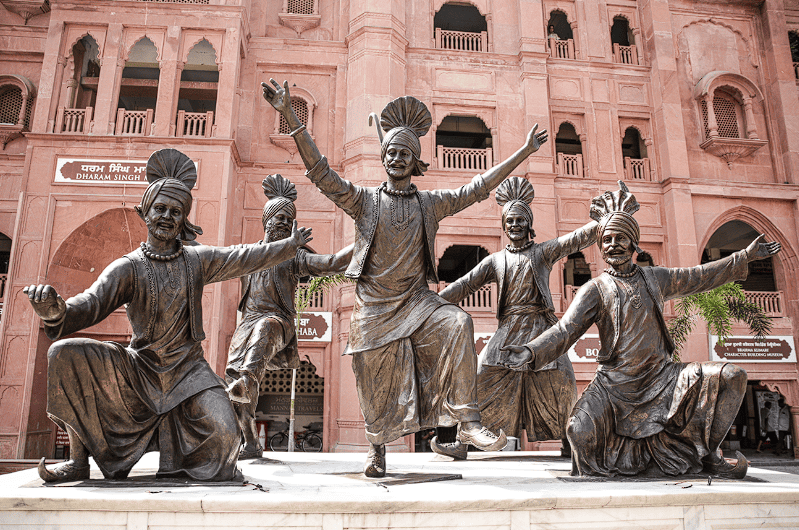
The outfits for Bhangra are Turla or torla, Pag, which is a turban that is a sign of pride/honour in Punjab and is tied differently than the traditional turbans that the Sikhs and other people wear on the street, Kurta which is a silk shirt, with about four buttons and is very loose with embroidered patterns, Lungi or chadar which is a loose loincloth tied around the dancer’s waist, Jugi which is a waistcoat with no buttons, and Rumāl which are small scarves that are worn tied on to the fingers.
6. Bhangra is a very energetic and fun dance form, which is perfect for Bollywood’s filmi songs.We’ve seen a number of popular Bollywood songs that feature bhangra, such as “Tung Tung” from Bhaag Milkha Bhaag, “Beat Pe Booty” from A Flying Jatt, and “Laung Gawacha” from Udta Punjab.
7. The traditional folk dance of Bhangra is undergoing a process of modernization in order to appeal to a wider audience. This includes incorporating new elements into the dance, such as hip-hop and pop music.
8. Bhangra is not limited to only Punjab or Punjabi people. It can be performed by anyone and can be learned by anyone
9. Bhangra can be performed on energetic as well as on slow music.
10. The dance is accompanied by short songs called boliyan and the rhythmic beat of a dhol (a double-headed drum).
MORE FACTS
Musical Elements:
- Instruments: Bhangra music typically features a prominent dhol beat, which sets the pace and rhythm of the dance. Other instruments like the tumbi, chimta (metal tongs), dholak (hand drum), and various wind instruments add layers of melody and rhythm to the music.
- Melodic and Rhythmic Patterns: Bhangra music is characterized by its upbeat tempo, syncopated rhythms, and repetitive melodic phrases. The dhol beat is central, driving dancers to perform energetic movements and footwork.
Dance:
- Energetic Movements: Bhangra dance is known for its lively and athletic movements, including energetic kicks, jumps, and spins. Dancers often form circles or rows, performing synchronized steps to the rhythm of the music.
- Traditional Attire: Traditional Bhangra attire includes vibrant and colorful outfits, often featuring loose-fitting pants (salwar) paired with a tunic (kurta) for men, and a colorful dress (salwar-kameez) for women. Accessories like scarves and turbans (pagri) add to the visual appeal.
Modern Influence and Global Popularity:
- Evolution: In modern times, Bhangra has evolved beyond its traditional roots and has been fused with contemporary musical genres like hip-hop, pop, and electronic music. This fusion has contributed to its popularity not only in South Asia but also among global audiences.
- Popularity: Bhangra music and dance have gained international recognition, with Bhangra artists performing at festivals, concerts, and cultural events worldwide. Its infectious rhythm and vibrant energy have made it a favorite at weddings, parties, and dance clubs globally.
Cultural Impact:
- Identity and Pride: Bhangra serves as a cultural emblem for Punjabi identity and pride, celebrating the rich heritage and traditions of the Punjab region.
- Unity and Community: The communal aspect of Bhangra fosters a sense of unity and togetherness among performers and audiences, transcending boundaries of age, gender, and background.
Origins of Bhangra
The roots of Bhangra are deeply tied to Punjab’s agrarian culture. Historically, it was a dance performed by farmers during Vaisakhi, the harvest festival, which takes place in April. Vaisakhi is a significant occasion in the agricultural calendar, marking the beginning of the harvest season for wheat, the primary crop in Punjab. Bhangra was traditionally danced to celebrate the hard work of the farmers and the joy of a bountiful harvest. Its original movements mimicked the actions of farming, such as plowing, sowing seeds, and cutting the crops.
Bhangra, in its traditional form, was performed by men. The dance was accompanied by folk songs, which often praised the land, gods, and ancestors, as well as the energy and pride of the farmers. Over time, the music and dance developed distinct styles, adding more elaborate footwork and rhythms, while still retaining the rustic roots of its movements.
The Music of Bhangra
One of the most important elements of Bhangra is its music, which is defined by powerful, fast-paced beats. The primary instrument used in Bhangra music is the dhol, a large, double-headed drum that provides the driving, rhythmic backbone of the performance. The energetic beats of the dhol are central to the dance, as they dictate the tempo and intensity of the movements. Along with the dhol, other instruments like the tumbi (a small, high-pitched string instrument), chimta (metal tongs with bells attached), and algoza (a double-flute) are also used to create the traditional Bhangra sound.
Bhangra songs are often celebratory, covering themes of love, relationships, bravery, and the joy of rural life. The lyrics are written in Punjabi, and many songs are passed down through generations, maintaining a connection with the cultural heritage of the land.
Evolution of Bhangra
While Bhangra began as a rural, agricultural dance, it evolved over the years into a performance art that moved beyond the boundaries of the farm. In the mid-20th century, Bhangra experienced a transformation as it began to be performed at weddings, festivals, and other social gatherings. This shift allowed Bhangra to spread from the fields to urban areas, and it started becoming an integral part of Punjabi celebrations.
By the 1940s, with the partition of India and the subsequent division of Punjab between India and Pakistan, Bhangra took on new significance as a symbol of Punjabi identity. Despite the geographical division, Punjabis on both sides of the border continued to embrace Bhangra as a representation of their shared cultural heritage.
In the 1950s and 1960s, Bhangra made its way into films, theater, and television, particularly in India. This exposure introduced Bhangra to wider audiences beyond Punjab, making it a popular form of entertainment across the country. The Indian film industry, particularly Bollywood, incorporated Bhangra beats and dance steps into its music, contributing to its popularity.
Bhangra in the Diaspora
Bhangra’s global rise can be largely attributed to the Punjabi diaspora. Punjabis who migrated to the UK, Canada, the United States, and other countries in the 20th century brought Bhangra with them, using it as a way to stay connected to their cultural roots. The first major wave of Punjabi immigrants to the UK in the 1950s and 1960s saw Bhangra becoming a cornerstone of community gatherings, festivals, and celebrations.
In the 1980s and 1990s, Bhangra underwent another transformation as it fused with Western musical influences, giving rise to the Bhangra music genre. This new form blended traditional Bhangra beats with Western pop, reggae, hip-hop, and electronic music, creating a hybrid sound that became immensely popular, especially among second-generation Punjabi immigrants. Artists like Apache Indian, Alaap, Malkit Singh, and Gurdas Maan were at the forefront of this movement, and their music gained international recognition.
In the UK, especially in cities like London and Birmingham, Bhangra music became part of the mainstream club and music scene, with Bhangra dance competitions and performances becoming common. The vibrant beats and easy-to-learn steps of Bhangra made it accessible to people of all backgrounds, contributing to its global appeal.
Traditional vs. Modern Bhangra: A Dance Evolution
Bhangra, a vibrant and energetic dance form originating in Punjab, India, has undergone a significant transformation over the years. While traditional Bhangra maintains its roots in Punjabi culture and folk music, modern Bhangra has evolved to incorporate elements from Western music and dance styles.
Traditional Bhangra
Traditional Bhangra is characterized by its simple, rhythmic movements and use of traditional Punjabi instruments like the dhol (a double-headed drum). The dance is often performed in groups, with dancers forming circles or lines. The focus is on the joy and energy of the performance, rather than on complex choreography or technical skill.
Traditional Bhangra is typically associated with festive occasions like weddings, harvest festivals, and religious celebrations. It is a way to express joy, community, and cultural identity. The dance is often accompanied by traditional Punjabi folk songs, which tell stories of love, loss, and heroism.
Modern Bhangra
Modern Bhangra has evolved to incorporate elements from Western music and dance styles, such as hip-hop, breakdancing, and Bollywood. The music is often faster-paced and more electronic, with a focus on catchy beats and repetitive hooks. The dance moves are more complex and acrobatic, often involving intricate footwork and aerial maneuvers.
Modern Bhangra has become a popular form of entertainment and exercise around the world. It is often performed at concerts, music festivals, and dance competitions. Many professional Bhangra dancers and choreographers have emerged, creating innovative and visually stunning performances.
Key Differences Between Traditional and Modern Bhangra
- Music: Traditional Bhangra uses traditional Punjabi instruments and folk songs, while modern Bhangra incorporates elements from Western music and electronic beats.
- Dance moves: Traditional Bhangra is characterized by simple, rhythmic movements, while modern Bhangra involves more complex choreography and acrobatic elements.
- Performance style: Traditional Bhangra is often performed in groups and is associated with festive occasions, while modern Bhangra is often performed as a solo or duo and is used as a form of entertainment and exercise.
- Cultural significance: Traditional Bhangra is deeply rooted in Punjabi culture and tradition, while modern Bhangra has become more international and commercialized.
The Evolution of Bhangra
The evolution of Bhangra can be attributed to several factors, including:
- Globalization: The increasing interconnectedness of the world has led to the exchange of cultural influences, including music and dance.
- Technological advancements: The development of new technologies, such as sound recording and music production, has made it easier for Bhangra artists to experiment with different styles and genres.
- Commercialization: Bhangra has become a popular form of entertainment and has been commercialized by the music industry.
Despite the changes that have occurred, Bhangra continues to be a vibrant and dynamic dance form. Both traditional and modern Bhangra have their own unique appeal and continue to be celebrated and enjoyed by people around the world.
Bhangra as a Competitive Dance
The globalization of Bhangra has led to the rise of Bhangra dance competitions, especially in countries with large Punjabi populations like the United States, Canada, and the UK. These competitions often feature university teams and professional Bhangra troupes who showcase their skills in front of large audiences. Competitions like Bhangra Blowout in Washington, D.C., and Bruin Bhangra in Los Angeles have become annual events that draw competitors and spectators from all over the world.
Competitive Bhangra has also evolved its style, with teams often incorporating intricate choreography, acrobatic stunts, and theatrical elements into their routines. Costumes have become more elaborate, and the dance now features a blend of traditional and contemporary moves, reflecting the global influences on the dance form.
Traditional vs. Modern Bhangra
Despite Bhangra’s global success, there is often a distinction made between traditional Bhangra and the more modern, competitive forms. Traditional Bhangra, performed during harvest festivals like Vaisakhi, tends to focus on more organic, rustic movements that mirror the agricultural roots of the dance. The music, too, tends to be more traditional, focusing on folk songs and rhythms.
In contrast, modern Bhangra, especially in its competitive and commercialized form, often blends in more contemporary dance styles, such as hip-hop or Bollywood dance moves. The music is also a hybrid of Punjabi folk rhythms and modern beats, often incorporating electronic instruments, synthesizers, and Western musical influences.
While both forms of Bhangra are celebrated, there is sometimes debate about how far Bhangra can evolve without losing its traditional roots. Nevertheless, the fusion of Bhangra with modern influences has made it accessible to younger generations and non-Punjabi audiences, ensuring its continued growth and relevance.
Cultural Significance
Bhangra is more than just a dance; it’s a cultural emblem for Punjabis worldwide. It represents the vibrancy, resilience, and spirit of the Punjabi people. Bhangra’s energetic and joyful nature is a testament to the Punjabi ethos of “Chardi Kala” (eternal optimism and high spirits). Whether performed at a village festival in Punjab or a dance competition in New York, Bhangra brings people together, transcending cultural and geographical boundaries.
Moreover, Bhangra’s adaptability has allowed it to evolve over time, absorbing influences from other cultures and art forms while still retaining its core essence. This ability to innovate while honoring tradition is a key reason for Bhangra’s global appeal and lasting popularity.
FAQs
Here are 20 frequently asked questions (FAQs) about Bhangra dance, exploring its history, cultural significance, and evolution:
1. What is Bhangra?
- Bhangra is a lively and energetic folk dance originating from the Punjab region of India and Pakistan. It was traditionally performed by farmers to celebrate the harvest season.
2. Where did Bhangra originate?
- Bhangra originated in the Punjab region, primarily as a harvest dance performed by Punjabi farmers to celebrate the end of the agricultural season, especially during the festival of Vaisakhi.
3. What is the significance of Bhangra in Punjabi culture?
- Bhangra holds great significance in Punjabi culture as a form of celebration and expression. It is traditionally associated with joy, festivity, and cultural pride, especially during harvest festivals and weddings.
4. What instruments are used in Bhangra music?
- The primary instrument used in Bhangra music is the dhol, a double-sided drum that provides the energetic beat. Other instruments include the tumbi (a single-stringed instrument), chimta (metal tongs), algoza (double flute), and sarangi (stringed instrument).
5. How did Bhangra evolve from a folk dance to a global phenomenon?
- Bhangra evolved from a rural folk dance to a global phenomenon through the Punjabi diaspora, especially in the UK, Canada, and the US, where it merged with other music genres like hip-hop and pop, giving rise to a modern fusion known as Bhangra-pop or Punjabi pop.
6. What are the basic movements in Bhangra?
- Bhangra is characterized by high-energy movements, including stomping, jumping, arm swings, and shoulder bounces. It often involves the use of both arms and legs in coordination to match the fast rhythm of the dhol.
7. Is Bhangra performed only by men?
- Historically, Bhangra was performed by men during the harvest season. However, over time, women have also become active participants in Bhangra performances, both in traditional and modern forms.
8. What is Giddha, and how does it relate to Bhangra?
- Giddha is a traditional Punjabi folk dance performed by women, featuring graceful movements, clapping, and singing. While Bhangra is more energetic and vigorous, Giddha complements it as the female counterpart, celebrating similar themes of joy and festivity.
9. What is the importance of costumes in Bhangra?
- The costumes worn during Bhangra performances are colorful and vibrant, reflecting the festive spirit of the dance. Men typically wear a kurta (long shirt), lungi or chadar (sarong-like wrap), and a turban, while women wear a salwar kameez with bright dupattas.
10. Can Bhangra be performed solo or only in groups?
- While Bhangra is traditionally performed in groups, individual performers can also perform solo routines, especially in modern competitive Bhangra, where individuals showcase their unique style and skill.
11. What are the different styles of Bhangra?
- Different styles of Bhangra have developed over time, including traditional Jhoomer Bhangra, Sammi, and Luddi. Modern variations include fusion Bhangra, which blends Bhangra with other dance styles like hip-hop, Bollywood, and Western pop.
12. What is the role of Bhangra in Punjabi weddings?
- Bhangra is a central part of Punjabi weddings, performed during various celebrations, including the Sangeet and Mehndi ceremonies. It adds joy, energy, and a festive atmosphere to the occasion.
13. How has Bhangra influenced popular music and dance internationally?
- Bhangra has influenced global music and dance by merging with hip-hop, reggae, and electronic music, giving rise to Bhangra fusion. Artists like Punjabi MC, Jay Sean, and Jazzy B helped popularize Bhangra on an international level.
14. Are there Bhangra competitions?
- Yes, Bhangra competitions are popular worldwide, especially in countries like the UK, Canada, and the US. These events showcase both traditional and modern styles of Bhangra, with teams competing for titles.
15. What are the health benefits of Bhangra?
- Bhangra is an excellent form of cardiovascular exercise that improves stamina, flexibility, and coordination. It is also a fun way to relieve stress and boost mental health through movement and music.
16. Is there a difference between traditional and modern Bhangra?
- Traditional Bhangra focuses on folk movements, instruments, and themes related to rural life and the harvest. Modern Bhangra, or fusion Bhangra, blends contemporary music and dance elements, incorporating Western beats and modern choreography.
17. Can beginners learn Bhangra easily?
- Yes, Bhangra is relatively easy to learn for beginners due to its repetitive and energetic movements. Many beginners start with basic steps and gradually build up to more complex routines as they gain confidence and stamina.
18. What role does the dhol play in Bhangra?
- The dhol is the heartbeat of Bhangra. It provides the rhythmic foundation for the dance, with its booming, fast-paced beats driving the high-energy movements of the dancers.
19. What is the significance of the Bhangra dance in Vaisakhi celebrations?
- Bhangra is deeply connected to Vaisakhi, the Punjabi harvest festival. It symbolizes the joy and gratitude of farmers for a successful harvest and is a key cultural element of Vaisakhi celebrations.
20. How has technology influenced Bhangra?
Technology, especially through social media and streaming platforms like YouTube, has allowed Bhangra to reach global audiences. It has led to the development of online tutorials, virtual performances, and the mixing of Bhangra with various genres of music, making it accessible to a broader audience worldwide.ngra Paa Le,” and “Mundeya To Bachke Rahyo.”
Bhangra Dance
Bhangra Dance
Bhangra Dance
Bhangra Dance
Bhangra Dance
Bhangra Dance
Bhangra Dance
Bhangra Dance
Bhangra Dance
Bhangra Dance
Bhangra Dance
Bhangra Dance
Bhangra Dance
Bhangra Dance
Bhangra Dance
Bhangra Dance
Bhangra Dance
Bhangra Dance
Bhangra Dance
Bhangra Dance
Bhangra Dance
Bhangra Dance