Read Now
Getting your Trinity Audio player ready... |
Bulleh Shah
Bulleh Shah: Personal Life, Family, and Birth, Biography
Bulleh Shah, one of the greatest Sufi poets of the Indian subcontinent, is remembered for his deep spirituality, bold defiance of orthodoxy, and mesmerizing poetry that continues to inspire millions. His verses, rich in mysticism and humanism, challenge rigid dogmas and advocate for love, unity, and self-realization. Understanding Bulleh Shah’s life requires delving into his family background, early life, and personal struggles, which shaped his philosophical and poetic journey.
Birth and Family Background
Bulleh Shah was born in 1680 in the village of Uch Gilaniyan, located in Bahawalpur, present-day Pakistan. His birth name was Syed Abdullah Shah Qadri, but he became widely known as Bulleh Shah. He belonged to a Sayyid family, a lineage that traces its ancestry to the Prophet Muhammad. His father, Syed Sakhi Shah Muhammad Darwaish, was a respected scholar and preacher, which gave Bulleh Shah an early exposure to Islamic teachings and the study of religious scriptures.
Despite being born into a privileged and scholarly family, Bulleh Shah’s life was far from one of luxury. His family later moved to Kasur, a significant cultural and religious hub during that time. This move played a crucial role in shaping his intellectual and spiritual growth, as Kasur was home to many scholars, poets, and Sufi saints.
Education and Spiritual Quest
From a young age, Bulleh Shah exhibited a keen interest in learning. He was educated in Arabic, Persian, and Islamic studies, which were essential subjects for a Sayyid family member. He studied under the guidance of prominent scholars and theologians, but his thirst for spiritual knowledge led him beyond formal religious education.
One of the most influential figures in his life was his spiritual mentor, Shah Inayat Qadiri, a Sufi saint from Lahore. Despite belonging to a lower social class, Shah Inayat’s spiritual wisdom captivated Bulleh Shah, leading him to become his disciple. This decision sparked controversy, as many in Bulleh Shah’s community disapproved of him associating with a non-Sayyid teacher. However, Bulleh Shah remained steadfast in his pursuit of spiritual enlightenment, valuing divine wisdom over societal norms.
Personal Life and Struggles
Bulleh Shah’s devotion to Sufism led him to renounce materialistic desires and worldly pursuits. Unlike many poets of his time who sought patronage from rulers and nobles, Bulleh Shah lived a simple and humble life. His poetry reflects his internal struggles and his journey toward self-realization.
His relationship with Shah Inayat was a defining aspect of his personal life. He often expressed his deep love and admiration for his master through poetry, portraying the disciple’s longing for unity with the divine. However, this deep spiritual connection also led to societal rejection and personal hardships. Many of his family members and acquaintances turned against him, seeing his devotion to a lower-class mentor as a betrayal of his noble lineage.
Despite these challenges, Bulleh Shah remained unwavering in his beliefs. His poetry conveys a message of universal love, tolerance, and the rejection of religious hypocrisy. He openly criticized religious authorities who prioritized rituals over genuine spirituality, which led to further alienation from the orthodox religious circles.
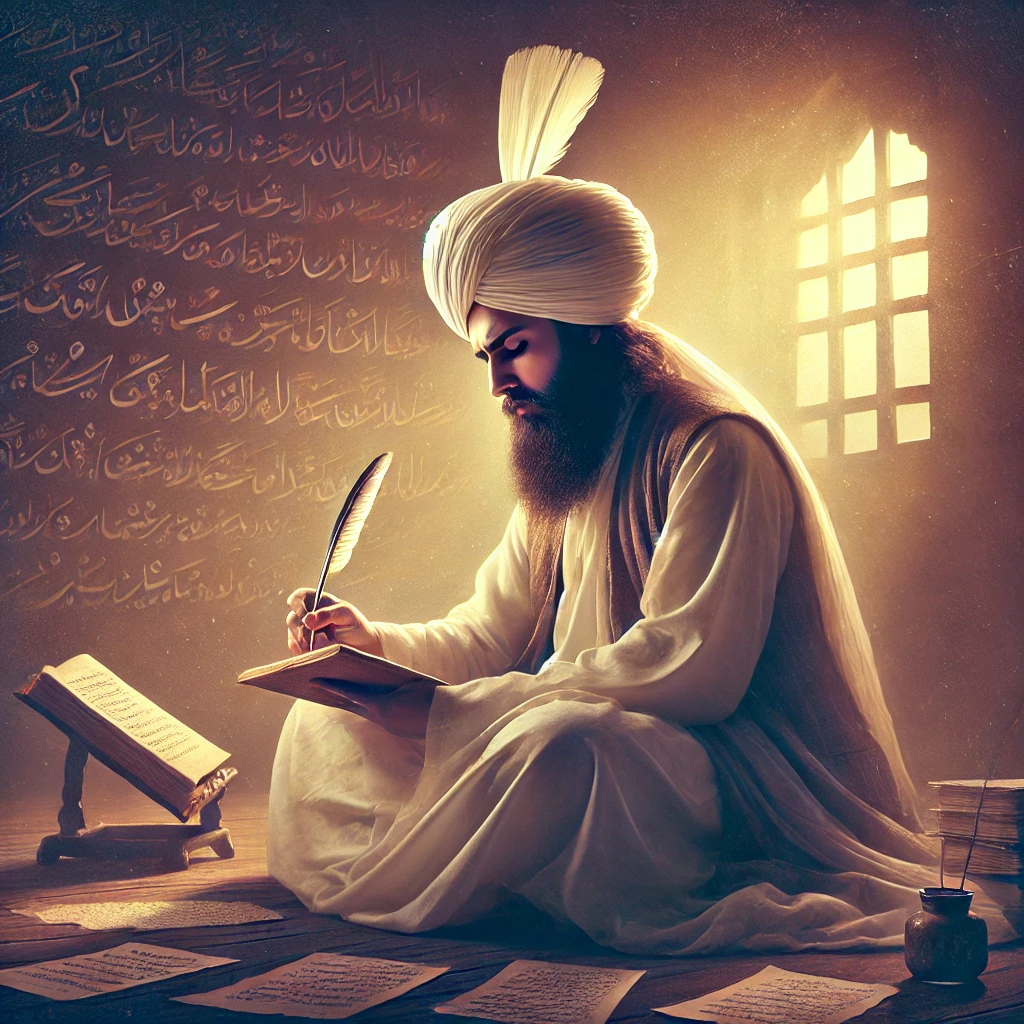
Influence of Sufism on His Life
Sufism played a central role in shaping Bulleh Shah’s philosophy and personal life. The essence of his poetry lies in the concept of divine love, self-surrender, and the dissolution of the ego. He often used metaphors and allegories to convey mystical themes, making his work deeply personal yet universally relatable.
His poetry also reflects the teachings of other Sufi saints, such as Rumi, Hafiz, and Baba Farid. Like them, he emphasized the idea that true divinity lies within the self and that love is the path to enlightenment. His verses frequently explore themes of self-discovery, unity with the divine, and the rejection of superficial distinctions based on caste, creed, or social status.
Legacy and Influence
Bulleh Shah passed away in 1757 in Kasur, where his shrine stands today as a symbol of love and devotion. His poetry continues to resonate across generations, transcending cultural and religious boundaries. His work has been widely interpreted in various musical forms, including Qawwali and folk music, keeping his message alive in contemporary times.
Despite facing opposition during his lifetime, Bulleh Shah’s legacy endures as one of the most profound voices in Sufi literature. His life and poetry serve as a testament to the power of love, the pursuit of truth, and the courage to challenge societal norms in the quest for spiritual fulfillment.
Conclusion
Bulleh Shah’s personal life was marked by both devotion and defiance. Born into a respected family, he chose the unconventional path of Sufism, rejecting rigid religious orthodoxy in favor of a more profound spiritual journey. His unwavering faith in divine love and his commitment to truth made him a revered yet controversial figure. Today, his poetry continues to inspire and guide seekers of wisdom, making Bulleh Shah an eternal symbol of love, tolerance, and enlightenment.
FAQs
General Information
- Who was Bulleh Shah?
- Bulleh Shah (1680–1757) was a Punjabi Sufi poet, philosopher, and humanist known for his deep and thought-provoking poetry.
- Where was Bulleh Shah born?
- He was born in Uch, Bahawalpur, Punjab (now in Pakistan) and later moved to Kasur.
- What was Bulleh Shah’s real name?
- His real name was Syed Abdullah Shah Qadri.
- Which Sufi order did Bulleh Shah belong to?
- He was associated with the Qadiri Sufi order.
- Who was Bulleh Shah’s spiritual teacher?
- His mentor was Shah Inayat Qadiri, a Sufi master from Lahore.
Teachings & Philosophy
- What were the main themes of Bulleh Shah’s poetry?
- His poetry focused on love, unity, self-realization, and rejection of religious orthodoxy.
- Did Bulleh Shah criticize religious hypocrisy?
- Yes, he often criticized clerics and rigid religious practices, promoting spirituality over ritualism.
- What did Bulleh Shah say about love?
- He considered divine love the ultimate path to God, often using metaphors of earthly love to express mystical experiences.
- How did Bulleh Shah define God?
- He saw God as an inner experience, beyond rituals and formal prayers.
- Did Bulleh Shah believe in religious divisions?
- No, he rejected religious divisions and believed in universal love and human unity.
Poetry & Influence
- What language did Shah write in?
- He wrote in Punjabi, using simple yet profound language.
- Why is Shah’s poetry still relevant today?
- His message of love, tolerance, and resistance against oppression resonates across generations.
- Which famous poetic form did Shah use?
- He mainly wrote in Kafi (a form of Punjabi Sufi poetry).
- What are some of Shah’s most famous poems?
- His famous verses include:
- “Bullah Ki Jaana Main Kaun” (Who am I, Bulleh, to say who I am?)
- “Parh Parh Aalim Faazil Hoya” (You read and become scholars, but fail to know yourself).
- Which artists have sung Shah’s poetry?
- Many, including Nusrat Fateh Ali Khan, Abida Parveen, Wadali Brothers, and Rabbi Shergill.
Life & Legacy
- Why was Bulleh Shah persecuted?
- He faced opposition for his spiritual beliefs, rejection of religious orthodoxy, and association with a non-Syed teacher.
- Where is Shah buried?
- His tomb is in Kasur, Punjab, Pakistan.
- Is Shah respected in different religions?
- Yes, he is revered by Muslims, Sikhs, and Hindus alike.
- What role did he play in society?
- He was a reformer, challenging religious dogma and advocating for peace.
- How does Shah compare to other Sufi poets?
- He is often compared to Rumi, Kabir, and Shah Hussain for his mystical approach and poetic depth.
Modern Influence & Recognition
- Is Shah’s poetry studied academically?
- Yes, his works are analyzed in literature and Sufi studies worldwide.
- Has Shah influenced modern literature?
- Absolutely! His poetry has inspired books, plays, and contemporary music.
- Is there any film or documentary on Shah?
- Yes, there are several documentaries and adaptations based on his life and poetry.
- How do people celebrate Shah’s legacy today?
- His urs (death anniversary) is celebrated with qawwalis, poetry recitations, and Sufi gatherings at his shrine in Kasur.
- What is the most important lesson from Shah’s poetry?
- The key message is self-awareness, love beyond boundaries, and unity with the divine.