Read Now
Getting your Trinity Audio player ready... |
Punjabi Marriage
Sikh Marriage Ceremony: An In-Depth Overview
A Sikh marriage ceremony, known as “Anand Karaj” (meaning “Blissful Union”), is a sacred and joyous union between two individuals. Rooted in Sikh traditions, this spiritual and cultural event reflects the values of equality, humility, and devotion. This article provides a comprehensive exploration of the Sikh marriage ceremony, its rituals, symbolism, and cultural significance.
Historical and Religious Significance of Anand Karaj
The Anand Karaj ceremony was formalized by the 4th Sikh Guru, Guru Ram Das Ji, in the 16th century. The ritual emphasizes the spiritual bond over material ties, symbolizing the coming together of two souls to embark on a lifelong journey as equal partners. The Anand Karaj is performed in the presence of the Guru Granth Sahib Ji, the holy scripture of Sikhism, which serves as the eternal Guru.
In Sikhism, marriage is not just a contract but a sacred institution. It is regarded as a spiritual journey where both partners support each other in achieving a life of devotion, service, and righteousness. Sikh marriages are traditionally arranged by families, although modern practices include love marriages as well.
Pre-Wedding Ceremonies
1. Roka and Thaka
- Roka: This is the official announcement of the engagement between the bride and groom. The families exchange gifts, and blessings are sought from elders.
- Thaka: A formal ceremony where the bride’s family visits the groom’s family to confirm the alliance. Gifts are exchanged, and auspicious dates are discussed.
2. Kurmai (Engagement Ceremony)
The Kurmai is the official engagement ceremony. It typically takes place at the groom’s home or a Gurdwara (Sikh temple). During the ceremony:
- The groom is given a kara (iron bracelet) and a turban by the bride’s family.
- The bride is gifted jewelry or clothing by the groom’s family.
- Both families recite Ardaas (a prayer) for blessings.
3. Mehndi (Henna Night)
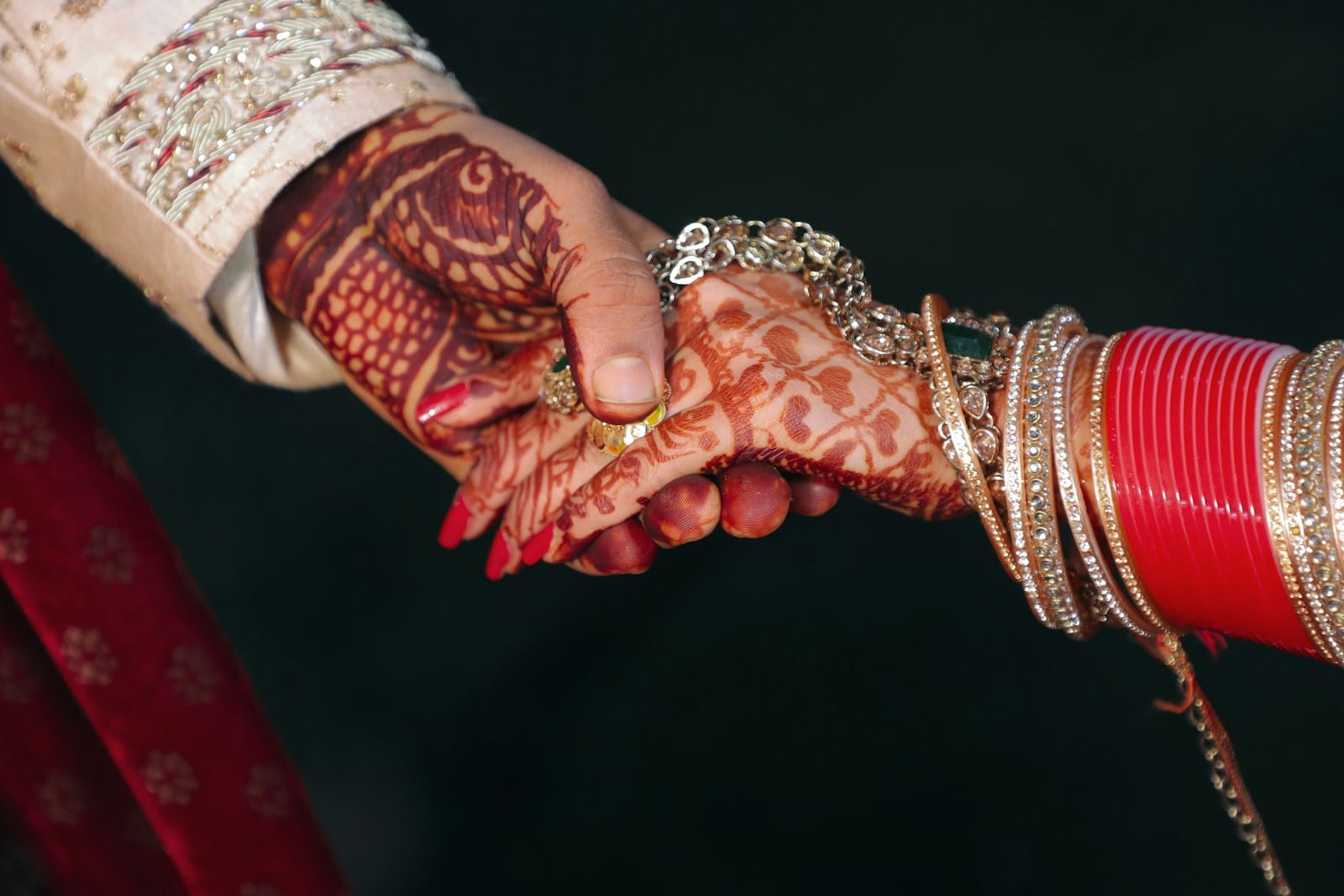
- The Mehndi ceremony is a colorful celebration where henna is applied to the bride’s hands and feet. This event is often accompanied by singing traditional Punjabi folk songs and dancing.
4. Sangeet
- The Sangeet night is a lively pre-wedding event filled with music, dance, and celebrations. Family and friends perform choreographed dances, and the bride and groom are often the center of attention.
5. Chooda Ceremony
- This ritual involves the maternal uncle (mama) gifting red and white bangles (chooda) to the bride, symbolizing prosperity and fertility.
6. Haldi (Vatna) Ceremony
- In this ritual, a paste of turmeric, sandalwood, and mustard oil is applied to the bride and groom. It is believed to cleanse and bless them for their new journey.
The Wedding Day
The wedding day is the most auspicious occasion, marked by elaborate rituals, traditions, and celebrations. It begins with early morning prayers and culminates in the Anand Karaj ceremony.
1. Groom’s Arrival (Baraat)
- The groom arrives at the bride’s venue (often a Gurdwara) in a grand procession known as the Baraat.
- He is accompanied by family and friends, who sing, dance, and celebrate.
- The groom traditionally rides a decorated horse or arrives in a modern vehicle, like a car or carriage.
- Upon arrival, the bride’s family welcomes the groom and his family with milni (a ceremonial greeting) and exchange of garlands.
2. Anand Karaj Ceremony
The Anand Karaj ceremony is the core of the Sikh wedding. It typically takes place in a Gurdwara and lasts around 1-2 hours.
Key Steps in the Anand Karaj:
- Ardaas (Prayer):
- The ceremony begins with a prayer seeking blessings from the Guru for the union.
- Kirtan:
- Hymns from the Guru Granth Sahib are sung by the Ragis (musicians), creating a divine atmosphere.
- Palla Ceremony:
- The bride’s father or elder ties the groom’s scarf (palla) to the bride’s dupatta, symbolizing their bond.
- Laavan (Circumambulations):
- The core ritual involves the bride and groom walking around the Guru Granth Sahib four times.
- Each circumambulation is preceded by the recitation of a verse (known as Laavan) from the Guru Granth Sahib, which explains the spiritual significance of marriage.
- During the Laavan, the couple seeks guidance from the Guru to live a life of devotion, love, and service.
- Anand Sahib:
- The ceremony concludes with the recitation of the Anand Sahib (Song of Bliss) and the final prayer (Ardaas).
- Distribution of Karah Prasad:
- At the end of the ceremony, Karah Prasad (a sweet offering) is distributed among all attendees, symbolizing equality and gratitude.
Post-Wedding Rituals
1. Reception
- A grand reception is organized by the groom’s family, where the newlyweds are introduced to extended relatives and friends.
2. Vidaai (Farewell of the Bride)
- The bride bids farewell to her family in an emotional ceremony, symbolizing her transition to her new home. She is traditionally escorted by her brothers or close male relatives.
3. Phera Ceremony
- Upon arriving at the groom’s home, the couple performs a small ritual, seeking blessings from the groom’s family deities or elders.
4. Pag Phera
- In this tradition, the bride visits her parental home for the first time after marriage, often accompanied by her husband.
Cultural and Social Aspects
Sikh weddings are known for their vibrant celebrations, elaborate traditions, and deep-rooted cultural values. Here are some notable aspects:
- Equality and Simplicity:
- The Anand Karaj ceremony emphasizes simplicity and equality. Unlike extravagant displays of wealth, the ceremony focuses on spiritual commitment.
- Community Involvement:
- Sikh weddings involve the entire community. The langar (community kitchen) serves food to all guests, reflecting the principle of selfless service.
- Gender Equality:
- Sikhism upholds the principle of gender equality. Both the bride and groom are seen as equal partners in their journey of life.
- Music and Dance:
- Punjabi music and dance, including Bhangra and Gidda, are integral parts of pre- and post-wedding celebrations.
Significance of the Four Laavan
The four Laavan recited during the Anand Karaj ceremony hold deep spiritual significance:
- First Laav: Encourages the couple to begin their journey with the remembrance of God.
- Second Laav: Focuses on developing a deeper connection with the divine.
- Third Laav: Represents the merging of two souls into one.
- Fourth Laav: Symbolizes ultimate spiritual realization and eternal unity.
Modern Adaptations
While traditional Sikh weddings remain rooted in customs, modern adaptations are increasingly evident:
- Destination Weddings:
- Many Sikh couples now opt for destination weddings, blending tradition with modernity.
- Customized Outfits:
- Brides and grooms often wear designer outfits that combine traditional styles with contemporary fashion.
- Technology Integration:
- Livestreaming of weddings has become common, allowing relatives worldwide to participate.
Key Numbers in Sikh Weddings
- Attendance:
- Sikh weddings typically host 300-500 guests, though smaller ceremonies are becoming more common.
- Cost:
- The average cost of a Sikh wedding in India ranges between ₹15-30 lakhs, depending on the scale of celebrations.
- Duration:
- The Anand Karaj ceremony itself lasts about 1-2 hours, while pre- and post-wedding events span 3-5 days.
- Gurdwara Fee:
- The fee for conducting an Anand Karaj in a Gurdwara typically ranges between ₹10,000-50,000, depending on the location and scale.
Conclusion
A Sikh marriage ceremony, or Anand Karaj, is a beautiful blend of spirituality, culture, and joy. It highlights the essence of equality, devotion, and community values. Rooted in centuries-old traditions yet adaptable to modern times, Sikh weddings remain a unique and vibrant celebration of love and unity. The meticulous rituals, coupled with heartfelt prayers, ensure that the couple embarks on their journey with blessings, grace, and a deep connection to their faith.
FAQs
1. What is Anand Karaj?
Answer: Anand Karaj is the Sikh marriage ceremony, which means “blissful union.” It is a holy and sacred event conducted in the presence of the Guru Granth Sahib, the central religious scripture of Sikhism.
2. Where is an Anand Karaj usually performed?
Answer: An Anand Karaj is typically performed in a Gurdwara (Sikh temple) but can also take place at home or in other suitable locations, as long as the Guru Granth Sahib is present.
3. Who performs the Anand Karaj ceremony?
Answer: The ceremony is conducted by a Granthi (a Sikh priest) or any respected Sikh individual who is knowledgeable about the Sikh scriptures and traditions.
4. What are the essential components of an Anand Karaj?
Answer: The essential components include the recitation of the Lavan (four hymns), the Ardas (prayer), the exchange of garlands, and the circling (parikarma) of the Guru Granth Sahib by the couple.
5. What is the significance of the Lavan?
Answer: The Lavan consists of four hymns composed by Guru Ram Das, which describe the spiritual journey of the couple as they unite in marriage. Each hymn represents a different stage of their union and relationship with God.
6. How does the couple participate in the ceremony?
Answer: The couple circumambulates the Guru Granth Sahib four times, each time following the recitation of one of the Lavan hymns. The bride traditionally walks behind the groom, symbolizing their journey together.
7. What is the role of the family in an Anand Karaj?
Answer: Family members play a crucial role in the preparations, hosting the ceremony, and participating in various rituals, such as the Milni (formal meeting of the families) and the Anand Sahib (joyful hymn).
8. Are there any pre-wedding rituals in Sikhism?
Answer: Yes, pre-wedding rituals include the Roka (formal commitment), Kurmai (engagement ceremony), Sangeet (musical celebration), and Mehndi (henna application).
9. What is the significance of the Ardas in the ceremony?
Answer: The Ardas is a prayer seeking blessings from Waheguru (God) for the couple’s union. It is recited at the beginning and end of the ceremony, as well as at various other stages.
10. What should the couple wear during the Anand Karaj?
Answer: The bride typically wears a traditional Punjabi outfit, such as a lehenga or salwar kameez, while the groom wears a sherwani or kurta pajama. Both may also wear a turban and other traditional Sikh attire.
11. Can interfaith marriages be performed as Anand Karaj?
Answer: Traditionally, both partners should be Sikhs for an Anand Karaj. However, some Gurdwaras may allow interfaith marriages if the non-Sikh partner respects the Sikh faith and traditions.
12. What is the role of the Guru Granth Sahib in the ceremony?
Answer: The Guru Granth Sahib is the central focus of the ceremony, representing the spiritual authority and guidance for the couple. The couple takes vows in its presence.
13. What is the significance of the exchange of garlands?
Answer: The exchange of garlands symbolizes the acceptance and respect of the couple for each other as they enter into marriage.
14. What is the importance of Kirtan in the ceremony?
Answer: Kirtan, or the singing of Sikh hymns, is an integral part of the ceremony, creating a spiritual and uplifting atmosphere.
15. How long does the Anand Karaj ceremony typically last?
Answer: The Anand Karaj ceremony usually lasts about an hour, but the entire event, including pre-wedding and post-wedding rituals, can extend over several hours or days.
16. Are there any specific vows in an Anand Karaj?
Answer: The vows are implicit in the recitation of the Lavan hymns, which outline the couple’s commitment to each other and to a spiritual life centered around Sikh principles.
17. What is the significance of the Phere (circling the Guru Granth Sahib)?
Answer: The Phere represents the couple’s journey together, with each circle signifying a different aspect of their spiritual and marital journey.
18. Can a divorced person have an Anand Karaj?
Answer: Yes, a divorced person can have an Anand Karaj if they wish to remarry, provided they follow the Sikh traditions and guidelines.
19. What is the importance of community participation in the ceremony?
Answer: The Sikh community, or Sangat, plays an essential role in witnessing and blessing the union, reflecting the communal nature of Sikhism.
20. What is the role of the bride’s father in the ceremony?
Answer: The bride’s father traditionally escorts her to the ceremony and may participate in rituals such as the Kanyadaan (giving away of the bride), although this is not a mandatory part of Sikh weddings.
21. Are there any post-wedding rituals in Sikhism?
Answer: Post-wedding rituals include the Doli (farewell of the bride), where she leaves her parental home and is welcomed into her new home, and the reception, which celebrates the union.
22. What is the significance of the Karah Parshad?
Answer: Karah Parshad, a sweet offering made from wheat flour, sugar, and ghee, is distributed to all attendees as a symbol of equality and the blessings of Waheguru.
23. Can Anand Karaj be performed outside India?
Answer: Yes, Anand Karaj can be performed anywhere in the world, as long as it follows Sikh traditions and the Guru Granth Sahib is present.
24. What is the significance of the Saath Phera (seven steps) in Sikh weddings?
Answer: Unlike Hindu weddings, Sikh weddings do not include the Saath Phera. Instead, the focus is on the four Lavan hymns and the Phere around the Guru Granth Sahib.
25. How can one ensure a respectful and authentic Anand Karaj ceremony?
Answer: Ensuring a respectful and authentic ceremony involves adhering to Sikh traditions, seeking guidance from knowledgeable individuals, and maintaining the spiritual and communal essence of the event.